Live frame rate measurement via the browser's rAF clock. Reports current FPS, average, min, max, and 1% low — plus detects whether your display runs at 60, 120, 144, 165 or 240 Hz.
Press Start. The tool ticks every animation frame and reports live FPS. Make sure this tab is focused and in the foreground — browsers throttle background tabs to 30 FPS or lower.
—
FPS
Average FPS
-
Min FPS
-
Max FPS
-
1% low
-
Frames rendered
0
Run time
0s
Likely display Hz: -
Tip: browser FPS cannot exceed your monitor refresh rate. A result of ~60 means you have a 60Hz display. ~120, ~144 or ~240 means a high-refresh monitor. 1% low is the slowest 1% of frames — the stutter floor.
Was this tool helpful?Rate FPS Test:5.0(8 ratings)Thanks for rating!
FPS Test is a free, browser-based screen testing tool that lets you measures browser frame rate live using requestAnimationFrame.
Cost: Free, no signup
Install: None — runs in the browser
Privacy: Runs locally, no uploads
Platforms: Windows, macOS, Linux, Android, iOS
Time: Under a minute
What This FPS Test Measures
This tool uses the browser's requestAnimationFrame callback, which fires once per display refresh. By measuring the time between consecutive callbacks we derive the frames-per-second rate the browser is actually achieving on your device. The result is capped by two things: your monitor's refresh rate (since rAF can't fire faster than the display can update) and any throttling your browser applies (background tabs, power saving, GPU pressure).
Current, Average, Min, Max — And 1% Low
Raw FPS numbers fluctuate frame-to-frame, so the meaningful metrics are the averages across a sustained run. "Average" is the smoothed mean of every half-second of rendering. "1% low" is the slowest 1% of frames — this is the number that actually feels like stuttering when gaming or scrolling. A perfect 60 Hz setup shows 60 average / 60 min / 60 max / 60 1%-low. A stuttery setup might show 60 average but 38 for 1%-low, which will feel choppy even though the average is high.
Detecting Your Monitor Refresh Rate
The max FPS over a sustained run is effectively your display refresh rate (as the browser sees it). Common values:
~60 Hz: standard office monitor, most budget laptops.
~75 Hz: entry-level gaming monitors.
~120-144 Hz: mid-range gaming monitors.
~165 Hz: common premium gaming.
~240 Hz: high-end competitive gaming.
If you expected 144 Hz and see 60 Hz, check Windows Display Settings → Advanced → Refresh rate, and make sure your monitor is plugged into a DisplayPort or HDMI 2.0+ cable with enough bandwidth.
Why Browsers Throttle Background Tabs
Chrome, Firefox, and Edge all throttle background tabs to save battery and CPU. A tab not in the foreground typically drops to 1 Hz (one frame per second) or suspends rendering entirely. For an accurate reading, keep this tab focused and your browser window in the foreground. Also close other heavy tabs — if another tab is doing GPU work it can steal frames from this one.
When FPS Looks Fine But Motion Still Jumps
If the FPS average looks stable but motion still jumps forward, use the frame skipping test and the frame skipping guide to separate browser frame pacing from physical monitor refresh gaps.
FPS vs Hz: What Is the Difference?
FPS counts how many frames your browser and GPU produce each second. Hz counts how many times per second your display refreshes, no matter what is on screen. A 144 Hz monitor refreshes 144 times a second even if the browser only delivers 60 new frames to it.
In a browser the two are locked together. Rendering runs through requestAnimationFrame, which is effectively always vsync-on, so the browser produces at most one frame per refresh. That is why this test can never settle higher than your active refresh rate — a steady average equal to your Hz is a healthy result, not a hardware limit. (A Max reading a few frames above your Hz is timer jitter, not real extra frames.) Games with vsync disabled can render more FPS than the display shows; browsers offer no such uncapped mode in normal use. To measure the Hz side in depth, run the refresh rate test.
Why the Browser Can Read 60 on a High-Refresh Monitor
Sometimes the panel really is running at high refresh and it is the browser that delivers 60. Rule out these browser-side causes first — after each change, press Reset, then Start again; the average landing at your panel's rate confirms the fix.
Hardware acceleration off: software rendering commonly caps near 60 FPS. Check chrome://gpu (or your browser's acceleration toggle), enable it, and restart the browser.
Mixed-refresh multi-monitor: Chromium-based browsers can run windows at the slowest connected panel's rate. Move the window fully onto the high-Hz display, or temporarily unplug the 60 Hz one.
Safari on ProMotion Macs: turn off the "Prefer page rendering updates near 60fps" feature flag, then relaunch Safari.
If the reading still settles at 60 after these, the cause is usually monitor-side — the OS refresh setting, cable bandwidth, or laptop power mode. Use the refresh rate test and the 144 Hz stuck at 60 Hz guide to work through those step by step.
What Is a Good FPS? Frame Times From 30 to 240
Smoothness is really about frame time — the gap between screen updates:
30 FPS: 33.3 ms per frame — playable, but visibly choppy in motion.
60 FPS: 16.7 ms — the standard smooth baseline for desktops and most phones.
120 FPS: 8.3 ms — clearly smoother scrolling and fast motion.
144 FPS: 6.9 ms between frames.
240 FPS: 4.2 ms between frames.
The 30-to-60 jump is the biggest perceptual upgrade; 60-to-120 is still obvious in fast motion. For this browser test, a good result is a steady average equal to your refresh rate with the 1% low close behind it — a large gap between the two is the stutter described above. In-game FPS tiers are general guidance only: game performance depends on the title and your GPU, which this browser test does not measure.
Click Start. The tool uses requestAnimationFrame to count frames per second. Keep the tab focused — browsers throttle background tabs to 30 FPS or less.
What is 1% low FPS?
1% low is the average frame rate of the slowest 1% of frames over your run. It represents the stutter floor — what gameplay actually feels like during the worst hitches.
Why does my FPS cap at 60?
Because your monitor refresh rate is 60 Hz. The browser cannot render faster than your display updates. Enable higher refresh in Windows Display Settings > Advanced.
Does this measure game FPS?
No. This measures browser frame rate. Actual in-game FPS depends on the game engine and GPU. Most games have their own FPS overlay (Steam, GeForce Experience, RTSS).
Can I test FPS on my phone or tablet?
Yes. The test runs in any mobile browser with nothing to install. Most phones read about 60. 90 Hz and 120 Hz phones show higher only when the browser gets the full rate: adaptive-refresh (LTPO) panels and battery saver often hold it at 60, so charge up and turn off power saving for a true reading.
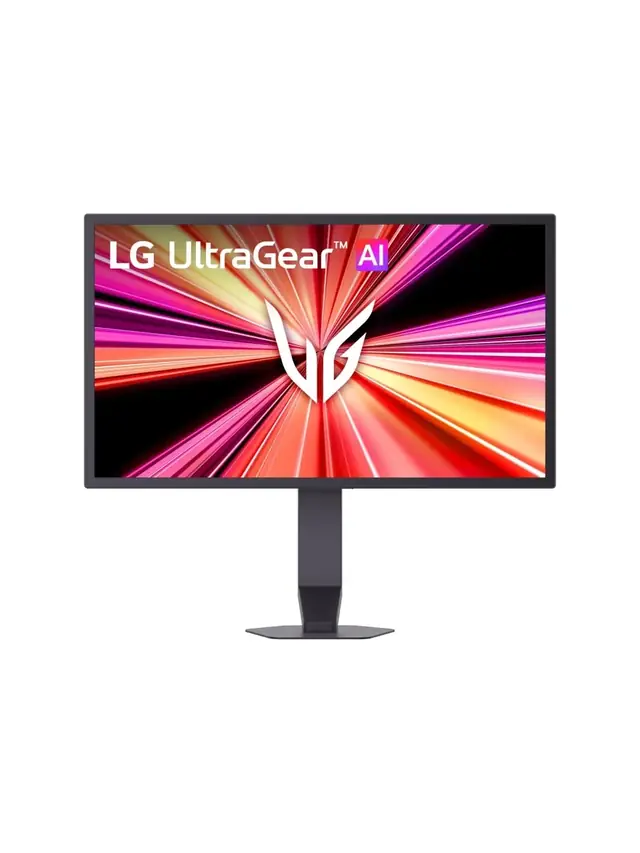
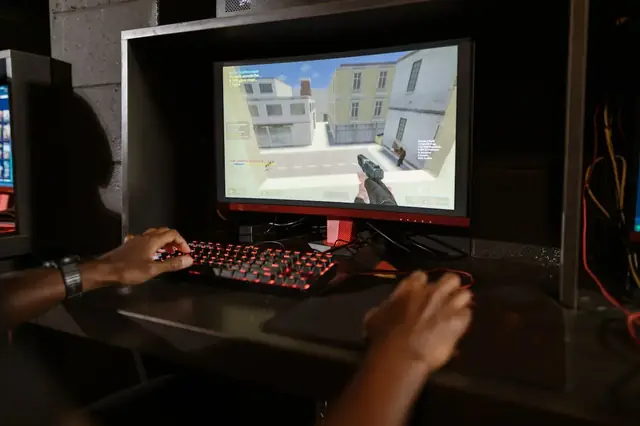
01 / 10Monitor reality check1000Hz Is Real. Worth $999?LG's UltraGear 25G590B is the first native 1000Hz 1080p monitor. Check the fine print first.02 / 10The price$999.99 for 1080pThat is the LG.com launch price, confirmed Sept 10. A 24.5-inch IPS esports panel.03 / 10The 1 ms mathOne Frame Lasts 1 msAt 1000 Hz a frame is on screen for 1 ms—the same figure as LG's own 1 ms GtG response spec.04 / 10LG's own footnoteMBR Pro Turns Off VRRFreeSync Premium and G-SYNC Compatible are disabled while MBR Pro runs. The 1100Hz overclock drops FreeSync.05 / 10Feeding itCan Your PC Push 1000 fps?LG lists Windows 11, RTX 50 / RX 9070-class GPUs and DisplayPort 2.1. 1000 Hz does not promise 1000 fps.06 / 10Reality check1080p Is Still the Majority50.52% of Steam players ran 1080p in August 2026. LG is selling speed to the biggest resolution group.07 / 10Same moneyWhat $999 Buys InsteadA 480Hz QHD OLED tracked at $547.54 on Jul 30. LG's own 480Hz dual-mode 27G850A: about $699.99.08 / 10Verdict splitBuilt for One Kind of PlayerSerious FPS competitors with GPUs to match may justify it. Everyone else buys sharper pixels for less.09 / 10Delivery dayTest Before You TrustVerify the refresh rate your system actually reports, frame skipping, dead pixels and motion clarity.10 / 10Your turnCheck Your Refresh RateSee what your browser reports right now. A browser check reads reported rate, not certified panel speed.
01 / 10Phone buying guidePWM-sensitive? Test the phone, not the promiseDisplay specs narrow the shortlist, but no OLED is comfortable for everyone.02 / 10Build the shortlistStart with the display strategyCompare LCD, DC-dimming and high-frequency PWM options. Each still needs a real-use check.03 / 10Read the evidenceSpecifications are only a filterFrequency, modulation, brightness and firmware can all change how a screen behaves.04 / 10Before testingEnable the documented display settingToggle names and effects vary by model. Confirm the current manual before testing.05 / 10First passTest at your normal brightness firstUse the reading, video and scrolling tasks you actually do each day.06 / 10Low-light passRepeat at a lower brightnessOLED dimming behavior may change as brightness falls. Keep the same room and screen content.07 / 10Store checkCompare camera bands, not just one photoUse the same camera, exposure and distance on each phone for a fair comparison.08 / 10Read cautiouslyBanding is a clue, not a lab resultCamera bands can reveal pulsing, but not exact PWM, modulation or medical conclusions.09 / 10Final decisionLet the return window settle the choiceTry normal use briefly. Stop if discomfort occurs; return it before the seller's deadline.10 / 10One last checkRun one controlled flicker comparisonUse the same brightness and camera setup, then save the result with your buying notes.
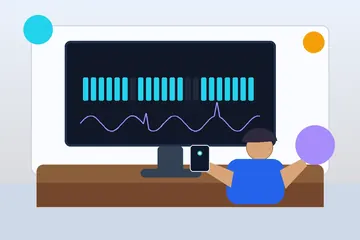
01 / 10Screen flicker testYour screen may be flickeringMany displays dim by switching the backlight on and off hundreds of times a second.02 / 10The symptomSore eyes and evening headachesStrain that gets worse at night, on one device but not another, is the clue.03 / 10What PWM meansDimming by blinking, not fadingInstead of lowering brightness, the backlight pulses. Faster pulsing is easier to tolerate.04 / 10Why night is worseLower brightness, deeper flickerThe dimmer you set the screen, the longer the backlight stays off between pulses.05 / 10Run the testWatch the moving patternA flickering backlight breaks the motion into separate copies instead of a smooth trail.06 / 10What to look forBands mean pulsingClear repeated edges suggest PWM. A smooth blur suggests steady, flicker-free dimming.07 / 10Not everyoneSome people never noticeSensitivity varies widely. Migraine and dry eyes can make the same screen unbearable.08 / 10What helpsRaise brightness, lower contrastHigher brightness usually shortens the off phase. Warm light and screen breaks help too.09 / 10One honest limitA browser cannot measure hertzThis shows whether flicker is visible to you, not the exact PWM frequency.10 / 10Your turnSee how your screen dimsRun the pattern at full and low brightness, then compare your devices.
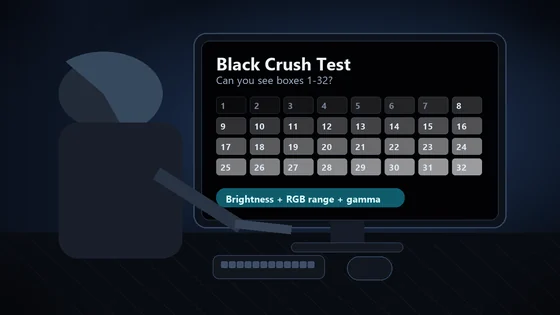
01 / 10Monitor checkDark scenes losing detail?Your monitor may be turning several near-black shades into one flat black.02 / 10The symptomShadow texture disappearsHair, clothing, caves and night scenes merge into featureless black. That is black crush.03 / 10Before you testUse normal SDR settingsDim the room, avoid glare and let your eyes adapt for 30 to 60 seconds.04 / 10The testLook for 32 near-black stepsPatch 1 is darkest. Patch 32 is easiest. Use fullscreen and do not expect the low steps to glow.05 / 10Read the resultFind the first visible patchIt should be barely separate from the black background. Note its number.06 / 10ExcellentYou can see 1 through 32Your display is preserving very dark shadow steps. Subtle is correct.07 / 10Mild crushingVisibility starts near 4Brightness may be too low, or gamma may be hiding the first few steps.08 / 10Moderate to severeVisibility starts at 8 or 16Check the monitor black-level setting and whether the GPU is sending Full or Limited RGB.09 / 10Fix one variable at a timeBrightness. Range. Gamma.Retest after each change. Establish a clean SDR result before troubleshooting HDR.10 / 10See what your display keepsRun all 32 shadow stepsThe live tool is the proper diagnostic surface; compressed story images are only a guide.