Free mouse acceleration test. Compare how many pixels you travel on a slow vs fast swipe of the same physical distance. Detect Windows mouse acceleration or firmware-level sensor acceleration.
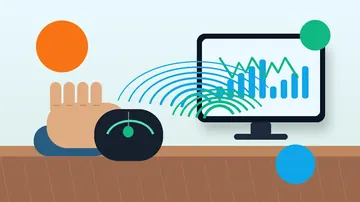
Swipe across the pad slowly, then swipe the same physical distance fast. If the pixel distances differ, acceleration is being applied somewhere in your stack.
Capture two swipes of the SAME physical distance: one slow (about 2 seconds) and one fast (under 0.5 seconds). A sensor without acceleration will report the same pixel distance for both. Ratios above 1.05 mean acceleration is being applied.
Step 1: Press and hold, drag slowly across the pad (about 2 seconds).
Slow swipe
Pixels-
Duration-
Speed (px/s)-
Fast swipe
Pixels-
Duration-
Speed (px/s)-
Fast / slow pixel ratio
-
Drag slowly first, then drag fast.
Tip: Windows "Enhance pointer precision" is the most common source of acceleration. Turn it off in Control Panel > Mouse > Pointer Options. Some gaming mice also have firmware acceleration on high polling rates — check the driver app.
Was this tool helpful?Rate Mouse Acceleration Test:5.0(2 ratings)Thanks for rating!
Mouse Acceleration Test is a free, browser-based mouse testing tool that lets you detect Windows pointer acceleration or firmware-level sensor acceleration.
Cost: Free, no signup
Install: None — runs in the browser
Privacy: Runs locally, no uploads
Platforms: Windows, macOS, Linux, Android, iOS
Time: Under a minute
What Is Mouse Acceleration?
Mouse acceleration is a non-linear scale applied between the physical motion of your hand and the on-screen cursor. With acceleration off, moving your mouse 10 cm always produces the same pixel travel. With it on, a faster swipe produces more pixels than a slow swipe of the same physical distance. It was designed to help desktop navigation, but for aim-sensitive work (FPS games, aim training, precision drawing) it's a muscle-memory destroyer.
The test compares the pixel-per-inch rate of two swipes of the same physical distance — one slow, one fast. The math is dead simple:
Ratio = fast pixels / slow pixels.
1.00 means linear tracking — no acceleration.
1.15+ means the fast swipe gained at least 15% more pixels — acceleration is active.
Under 0.95 means deceleration or sensor smoothing (some gaming drivers apply this).
Because you control the physical distance of both swipes, the ratio cancels out DPI, monitor resolution, and display scaling. It isolates the acceleration curve itself.
The Usual Suspects
Windows "Enhance pointer precision": the #1 source of acceleration on desktop. Off by default in gaming setup guides for a reason.
macOS default mouse tracking: uses a built-in acceleration curve. Use LinearMouse or SteerMouse to get a flat response.
Gaming mouse drivers: a handful of brands apply "motion sync" or "angle snapping" that behaves like mild acceleration. Check the driver app.
Laptop touchpads: almost always have acceleration. Don't test on a trackpad.
Why Pros Disable It
If acceleration is off but the same DPI still feels wrong after changing mice, use the same-DPI sensitivity troubleshooting guide to check real DPI variance, raw input, eDPI, polling rate, mousepad friction, and grip before blaming the game.
Competitive FPS relies on muscle memory — your brain learns that "this much hand motion = this much crosshair motion." Acceleration breaks that relationship because the crosshair now moves faster when your hand does. One-and-done flicks become guesswork. Every major CS2, Valorant, Apex, and Overwatch pro plays without mouse acceleration. If your ratio is over 1.15 here, turn it off before any aim-training session.
Swipe the same physical distance on the pad slowly then quickly. If the fast swipe reports more on-screen pixels than the slow one, acceleration is being applied somewhere (Windows, driver, or firmware).
What ratio means acceleration is on?
A fast/slow pixel ratio between 0.95 and 1.05 is linear (no acceleration). A ratio over 1.15 means meaningful acceleration. Ratios above 1.3 indicate aggressive OS or driver acceleration.
How do I turn off Windows mouse acceleration?
Open Control Panel > Mouse > Pointer Options and uncheck Enhance pointer precision. Set pointer speed to the 6/11 notch for a 1:1 response.
Does disabling acceleration help my aim?
Yes. Aim relies on muscle memory that ties hand distance to crosshair distance. Acceleration breaks that link, so every FPS pro plays with it off.
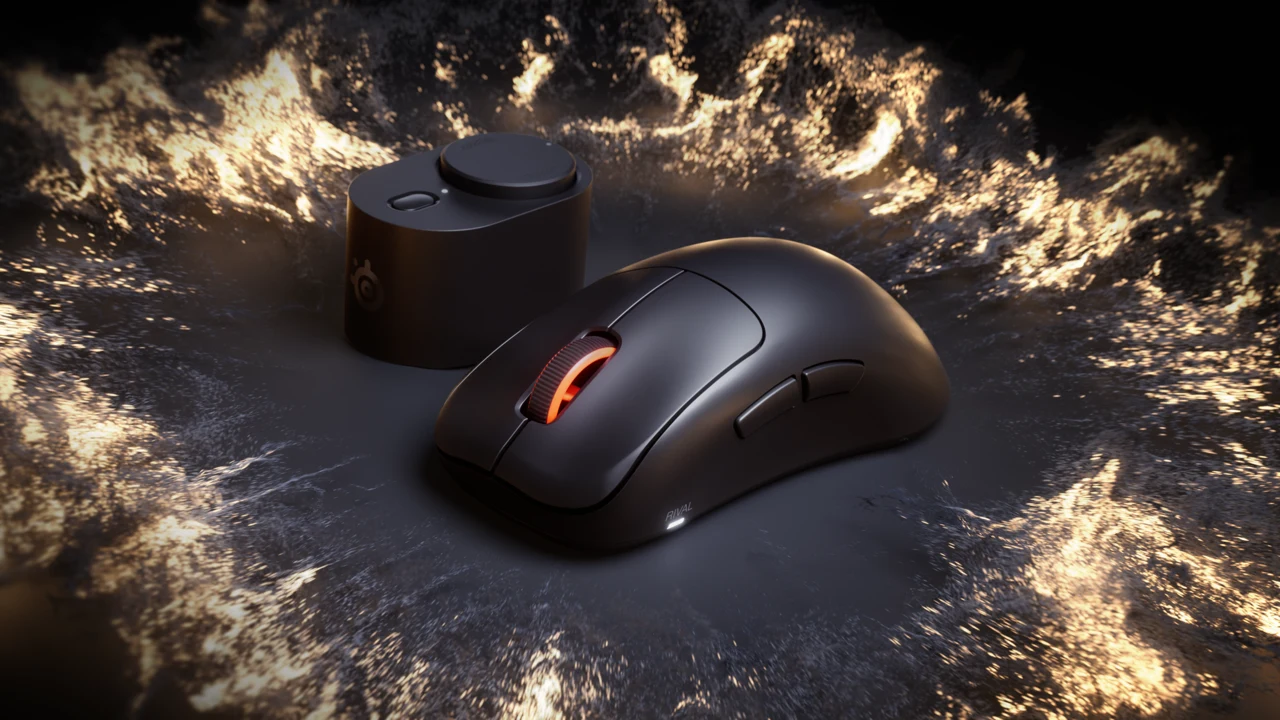
01 / 10Shape before specsRival Pro or Sensei Pro?Start with fit, size and button reach. The wireless headline is shared. Stock photos illustrate gaming.02 / 10Start hereWhat needs to change?Note palm contact, grip pressure and button reach on your current mouse. A replacement should solve a specific problem.03 / 10Official productRival: taller supportSteelSeries describes an ergonomic shell for palm and relaxed claw. Try the exact standard or Mini size for fit.04 / 10Official productSensei: lower profileA lower symmetrical shell, aimed at fingertip and aggressive claw. Check the exact thumb-button layout.05 / 10Compare dimensionsMini is not always lowerRival Pro Mini is 40.5 mm tall; standard Sensei Pro is 38.6 mm. Compare height as well as length.06 / 10In normal playCan you reach the controls?Aim while using the actions you need together. Check thumb-button reach and avoid accidental presses.07 / 10Vendor claimRead runtime per batterySteelSeries claims up to 16 h at 8K or 60 h at 1K per battery. The 32/120 h figures combine two batteries.08 / 10Know the limits8K is not a latency resultA browser cannot certify radio stability or physical click latency. Compare settings in your actual game.09 / 10Buying decisionUpgrade for a clear needKeep a mouse that works and fits. Confirm essential modes, total price and return terms before buying.10 / 10Check before replacingTest ordinary controls firstTest clicks and scrolling, then assess fit in play. A browser cannot certify hardware claims.
01 / 10Mouse showdownM42V2 vs M42The new mouse drops 14 g and seals the shell—but also moves from a PixArt 3389 to a 3327.02 / 10Weight45 g, Cable ExcludedCHERRY lists 45 g versus 59 g for the original M42. The V2 is solid, not perforated.03 / 10Modular shellTwo Shells Are Not NewBoth mice include two rear shapes. V2’s real shell change is a hole-free body with tool-free swaps.04 / 10SensorThe Sensor Trade-OffM42V2: 6,200 CPI, 220 IPS, 30 G. Original M42: 16,000 CPI, 400 IPS, 50 G.05 / 10InterpretationA Downgrade on PaperThose limits are lower. They do not prove bad tracking; independent instrumented tests still matter.06 / 10PollingSame 1,000 Hz CeilingBoth wired mice top out at 1,000 Hz. The V2 also offers 125, 250, and 500 Hz modes.07 / 10Price$39.99 US LaunchThe V2 launched at $39.99. The older M42 also showed $39.99 on sale when checked Sept. 4.08 / 10Other changesWhat Else Changed?Huano 80M-rated switches, no RGB, PTFE-free UHMW-PE glides, and no software requirement.09 / 10Buyer cautionWho Should Wait?Low-sensitivity players focused on fast-swipe tracking should wait for lab data or test within a return window.10 / 10Your turnTest Your M42V2Compare browser-observed pointer-event consistency at 1,000 Hz. A browser cannot certify raw USB polling.
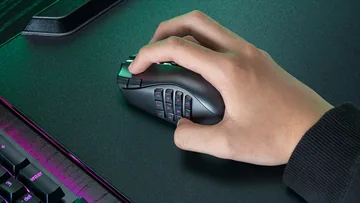
01 / 10MMO mouse decisionIs Razer's $180 Naga V3 Pro worth it?The answer depends on your binds, grip and tolerance for a heavier mouse.02 / 10The main reasonThree plates. Up to 23 controls.Choose 12 buttons for MMOs, 6 for mixed games or 2 for a simpler layout.03 / 10Learning curveMore buttons are not instant speedMap only awkward keyboard reaches first, then add commands as muscle memory settles.04 / 10Fit checkExpect about 112–117 g with a plateThat is feature-dense, not ultralight. Test grip comfort inside the return window.05 / 10Wireless and battery155 hours HyperSpeed; 280 BluetoothThose are Razer claims. Lighting, polling and use can shorten real runtime.06 / 1050K sensorShape matters more than maximum DPIFocus Pro 50K is flagship hardware, but normal play uses a fraction of its ceiling.07 / 10Clicks and scrollGen-4 optical switches; three wheel modesThe 100-million-click figure is a rating, not a promise for every unit.08 / 10Delivery dayTest every plate before building profilesCheck all buttons, wheel tilt, double inputs, DPI stages and wireless consistency.09 / 10The price tradeoff$179.99, while 8K needs an extra accessoryNative polling is 1,000 Hz. Do not buy a dongle unless you know why you need 8K.10 / 10VerdictBuy for many binds; skip for simple FPSIf you buy it, test every physical input before trusting a complex profile.