

Mouse DPI calculator

KeyboardTester.click

Free Mouse DPI Calculator & Sensitivity Converter

Measure true mouse DPI from pixels per inch and convert sensitivity between DPI values so your aim feels identical. Game presets for Valorant, CS2, Apex, Fortnite, Overwatch with cm/360° and recommended eDPI.

Download from Microsoft Store Download from Microsoft Store

Mouse DPI Calculator & Sensitivity Converter

Measure your real mouse DPI by dragging a known distance, or convert your in-game sensitivity to a new DPI without breaking muscle memory. Game presets (Valorant, CS2, Apex, Fortnite, Overwatch) include cm/360° and recommended eDPI.

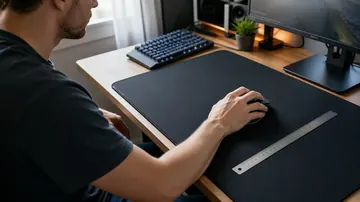
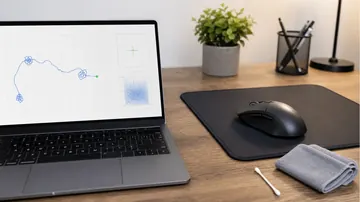
Drag inside the pad with your mouse, then enter the exact physical distance you moved. Or switch to manual mode and type pixel and inch values directly.
Press and hold inside this pad. Move your mouse a fixed physical distance (use a ruler), then release.
0 px
No drag recorded yet
True DPI
800
Sensor accuracy: -
Tip: the more inches you swipe, the smaller the measurement error. Aim for 4-8 inches of real movement.
Rate Mouse DPI Calculator: 5.0 (1 rating)
KeyboardTester.click assistant

Free for your site

Embed this Mouse DPI Calculator on your website

Add this free, no-signup tool to your own page or blog post in one click — just keep the small credit link.

Mouse DPI Calculator is a free, browser-based mouse testing tool that lets you measure your real mouse DPI by dragging a known physical distance or entering pixels and inches manually.

  • Cost: Free, no signup
  • Install: None — runs in the browser
  • Privacy: Runs locally, no uploads
  • Platforms: Windows, macOS, Linux, Android, iOS
  • Time: Under a minute

Guide to DPI Conversion and True DPI Measurement

This tool does two jobs in one. The Measure True DPI tab verifies that your mouse sensor actually reports the DPI it claims (cheap sensors can drift 5-15%). The Convert Sensitivity tab ports your in-game sensitivity to a new DPI value without breaking your muscle memory — your 360° turn distance stays identical. Pros use the converter every time they buy a new mouse, tweak DPI for a high-refresh monitor, or swap between games that use different sens scales. For a guided ruler-based measurement with tracking analysis, you can also measure your actual DPI with the live mouse DPI test and compare it against the number on the box.

If you are about to raise or lower DPI and want the same aim feel, read the full DPI change workflow for keeping your aim. It shows the exact eDPI formula, what to save before changing settings, and when to verify real hardware DPI.

When to Use This Tool

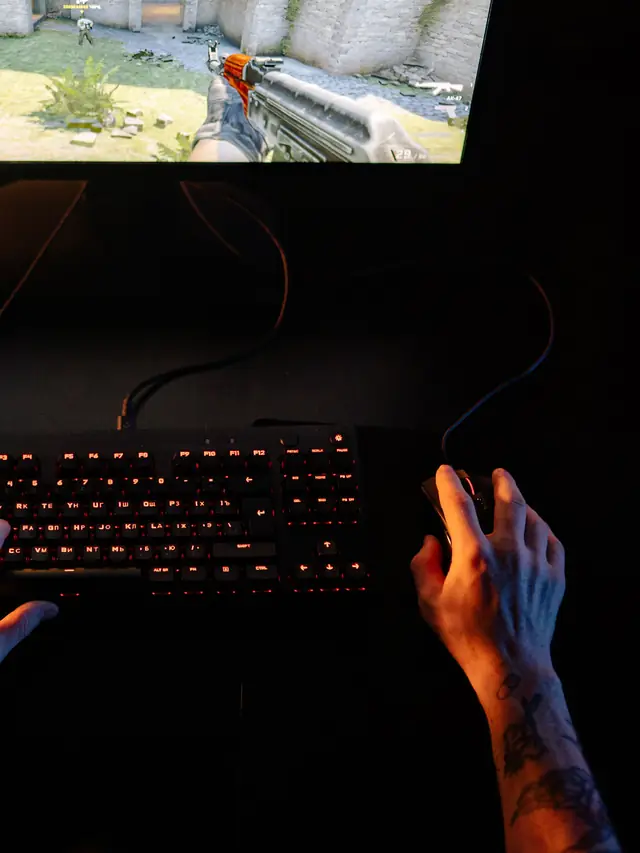
  • New mouse, same aim: Your old mouse ran 800 DPI @ 2.0 sensitivity. New mouse runs 1600 DPI natively. Plug in 800 → 1600 and the converter returns 1.0 — identical aim, zero muscle-memory reset.
  • Switching games: Your CS2 sens feels wrong in Valorant because Valorant uses a different yaw. Pick the target game, match the recommended eDPI, and the table shows every DPI × sens combo that hits it.
  • Verifying sensor honesty: Run the measure tab before you trust any DPI number. A mouse that reads 810 instead of 800 isn't a big deal. A mouse that reads 720 is lying to every aim trainer you use.
  • Hitting a pro's setup: You found a streamer with 400 DPI @ 0.4 in Valorant. Your mouse only supports 800 minimum. Convert 400 @ 0.4 → 800 and plug in the result (0.2) for the same aim on your hardware.

Understanding DPI (Dots Per Inch)

DPI is how many counts your mouse sensor reports per physical inch of movement. A 1600 DPI mouse moved exactly one inch produces 1600 counts. Higher DPI means finer movement resolution — smaller pointer steps, smoother aim on a high-refresh monitor, better sub-pixel precision for competitive play. But high DPI without a matching sensitivity reduction makes your crosshair overshoot. That's where the converter comes in.

True DPI = pixels moved / inches moved. Measure it with the drag pad above, then compare against whatever your mouse software claims. Most flagship sensors (PixArt 3395, 3950, Logitech HERO 25K) stay within ±1% of the advertised value. Budget sensors and older mice can drift ±10-15%.

Understanding eDPI (Effective DPI)

eDPI = DPI × in-game sensitivity. It's the single number that describes how fast your crosshair actually moves on screen. Two players with identical eDPI but different DPI will turn 360° with the exact same physical mouse movement (assuming the same game). This is why pros quote eDPI instead of raw sens — it's the only number that compares across setups.

Pro averages by game (use as a starting point, not gospel):

  • Valorant — 280 eDPI (200-400 range)
  • CS2 / CS:GO — 800 eDPI (600-1200)
  • Apex Legends — 1600 eDPI (1200-2400)
  • Fortnite — 600 eDPI (400-900)
  • Overwatch 2 — 4800 eDPI (3200-6400)
  • PUBG — 800 eDPI (500-1200)
  • Rainbow Six Siege — 1000 eDPI (800-1400)
  • CoD / Warzone — 4800 eDPI (3200-6400)
  • Quake Champions — 1600 eDPI (1200-2400)

Optimization Tips

  • Disable mouse acceleration first. Windows "Enhance pointer precision" adds a non-linear scale that poisons every measurement and makes consistent aim impossible. Turn it off in Control Panel → Mouse → Pointer Options. Set pointer speed to 6/11 (the middle notch) so Windows applies no scaling.
  • Pick a DPI that matches your screen. On 1080p, 400-800 DPI is plenty for FPS aim. On 1440p, 800-1600 feels more natural. On 4K, 1600+ stops feeling "sluggish" in productivity apps.
  • Stay under 3200 DPI for FPS. Higher DPI means tinier physical movements for the same crosshair travel — small sensor jitter becomes visible at very high DPI. Most pros sit between 400 and 1600.

  • Set polling rate to 1000 Hz (or 4000+ if supported). This controls how often the mouse reports position, not how far it moves per inch. Separate from DPI.
  • Measure on the same surface you play on. Cloth vs. hard pads can shift reported DPI by a few percent. Use the measure tab while the mouse is on your actual mouse pad.

Common Mistakes to Avoid

  • Changing DPI without converting sensitivity. The single biggest aim-wrecker. You double your DPI, your eDPI doubles, every flick overshoots. Use the converter.
  • Trusting advertised DPI without verification. Mouse software DPI settings and actual sensor output can disagree. Always measure first if you're copying a pro's exact setup.
  • Using a tiny swipe to measure. A 1-inch swipe amplifies rounding errors. Aim for 4-8 inches of real movement on the measure tab for an accurate reading.
  • Ignoring the game's yaw value when switching titles. Valorant at sens 0.4 is not Valorant at sens 0.4 in CS2. Yaw differs per game — the converter handles this when you pick a game.
  • Chasing pro eDPI blindly. Pros use low eDPI because they have huge mousepads and room. If you play at a desk with a small pad, 280 eDPI in Valorant may be too low to turn around. Stay in the range, don't copy exact numbers.

Final Recommendations

  1. Run the Measure True DPI tab once to confirm your sensor is honest.
  2. Pick a target eDPI in the Convert Sensitivity tab — use the game's pro range as a starting point.
  3. Save your conversion (the tool stores the last 20 conversions locally so you can compare setups).
  4. Use the quick reference table to see every DPI × sens combo that produces the same aim — pick whichever DPI your mouse supports natively.
  5. Play at that setup for at least a week before tweaking. Muscle memory takes time to re-anchor.

DPI is the foundation of your aim stack. Once it's dialled in, match the visual target too — read how to copy a pro's crosshair in CS2 and Valorant.

Mouse DPI Calculator FAQ

Common mouse dpi calculator questions

How do I calculate my mouse DPI?

DPI equals pixel movement divided by physical inches moved. Drag inside the pad a known distance (for example 4 inches), release, and the tool computes true DPI automatically.

Is the advertised DPI of my mouse accurate?

Not always. Cheaper sensors can deviate 5-15% from their advertised DPI. Flagship gaming sensors like PAW3395 or HERO usually stay within 1%.

Should I disable mouse acceleration before measuring DPI?

Yes. Turn off Enhance pointer precision on Windows and set pointer speed to the middle notch, otherwise the OS distorts the measurement.

Is the mouse DPI calculator private?

Yes. All calculation happens in your browser. No pointer data is uploaded.

Windows app

KeyboardTester.click is available from Microsoft Store

Install the official Windows app shortcut, or keep using the same free testing tools in your browser.

Download from Microsoft Store Download from Microsoft Store