











Fast answer: Use this guide as a practical checklist for the complete keyboard shortcuts cheat sheet: windows, macos & linux. Start with the main browser tool, confirm the result with one focused follow-up test, then change only one device, browser, or setting at a time so you know what actually fixed the issue.
Every study on power-user productivity reaches the same conclusion: the single highest-return habit you can build is using keyboard shortcuts instead of the mouse for frequent tasks. Expert users save roughly 64 hours per year from shortcut use alone.
A fast laptop workflow uses both input methods: keyboard shortcuts handle repeated commands, while the touchpad handles pointing and workspace navigation. Our laptop touchpad gestures, shortcuts, and tips guide shows how to combine them without memorizing an oversized gesture map.
This is the definitive cross-platform cheat sheet. Every shortcut below has been checked against the official sources — Microsoft Windows Support, Apple's Mac keyboard shortcuts page, and the Ubuntu / GNOME help system. Bookmark it, print it, paste it somewhere visible — then work through it ten shortcuts at a time.

What's in this guide
- Key conventions & how to read the tables
- Basic shortcuts (cut / copy / paste / undo)
- Cursor movement & text navigation
- Text selection
- Text formatting (bold, italic, etc)
- Text editing (delete, tab, indent)
- Web browsers — navigation, tabs, windows
- Address bar & bookmarks
- Screenshots (all three platforms)
- Windows 11 system shortcuts
- macOS system shortcuts
- Linux (GNOME / Ubuntu) shortcuts
- Terminal / shell shortcuts
- YouTube player shortcuts
- How to actually memorize them
Key conventions & how to read the tables
A few notation rules used throughout:
- + means "hold these keys together." So Ctrl+C = hold Ctrl, press C, release both.
- , (comma) means "press in sequence." Ctrl+K, Ctrl+C = press the first combo, release, then press the second.
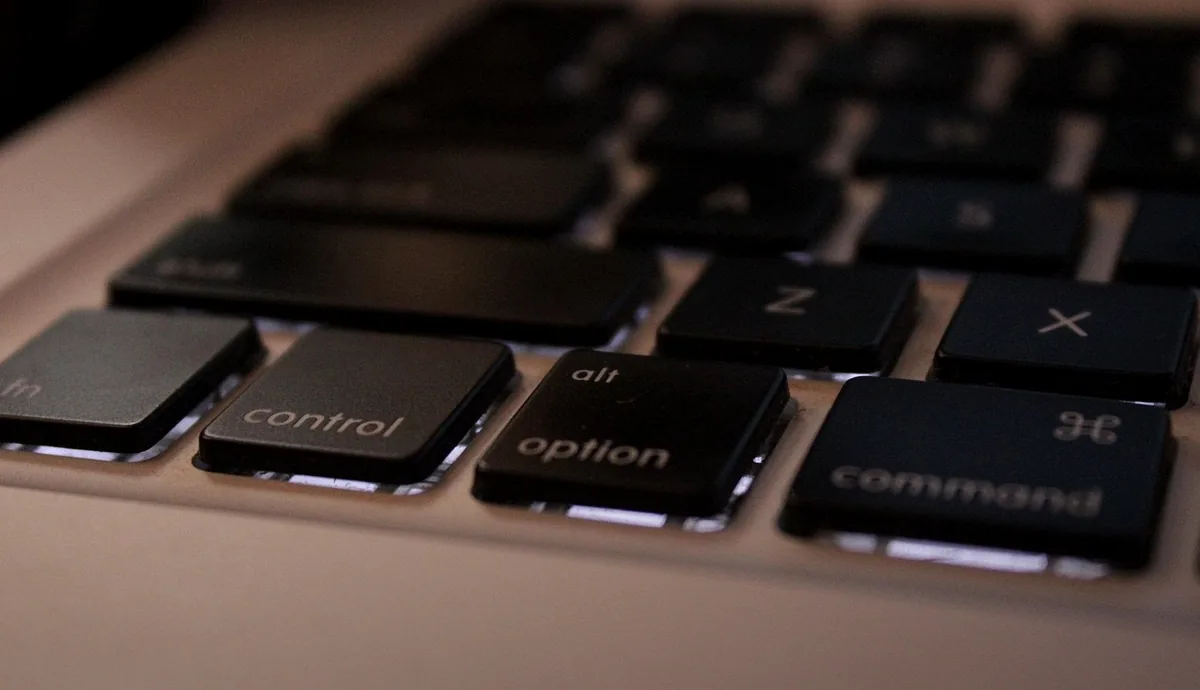
- On Mac, the Cmd key replaces Ctrl for most equivalents. The Option key (⌥) replaces Alt. There's also a Control key on Mac that does something different — it's not the same as Ctrl on Windows.
- On Linux, the Super key (⊞) is the one between Ctrl and Alt, often labelled with the Windows logo. It does what the Win key does on Windows and the Cmd key does on Mac.
- Verify on your own board with our online keyboard tester — every key you press lights up green so you can be sure modifier keys are registering before you start trusting shortcuts.
Basic shortcuts (used dozens of times a day)
| Action | Windows | macOS | Linux |
|---|---|---|---|
| Copy | Ctrl+C | Cmd+C | Ctrl+C |
| Cut | Ctrl+X | Cmd+X | Ctrl+X |
| Paste | Ctrl+V | Cmd+V | Ctrl+V |
| Paste without formatting | Ctrl+Shift+V | Cmd+Shift+Opt+V | Ctrl+Shift+V |
| Undo | Ctrl+Z | Cmd+Z | Ctrl+Z |
| Redo | Ctrl+Y | Shift+Cmd+Z | Ctrl+Shift+Z |
| Select all | Ctrl+A | Cmd+A | Ctrl+A |
| Save | Ctrl+S | Cmd+S | Ctrl+S |
| Save As | Ctrl+Shift+S | Cmd+Shift+S | Ctrl+Shift+S |
| New | Ctrl+N | Cmd+N | Ctrl+N |
| Open | Ctrl+O | Cmd+O | Ctrl+O |
| Find | Ctrl+F | Cmd+F | Ctrl+F |
| Find & Replace | Ctrl+H | Cmd+F then Replace | Ctrl+H |
| Ctrl+P | Cmd+P | Ctrl+P | |
| Close window / file | Ctrl+W | Cmd+W | Ctrl+W |
| Quit the app | Alt+F4 | Cmd+Q | Ctrl+Q |
Cursor movement & text navigation
| Move to… | Windows | macOS | Linux |
|---|---|---|---|
| Start of the line | Home | Cmd+← | Home |
| End of the line | End | Cmd+→ | End |
| Start of the document | Ctrl+Home | Cmd+↑ | Ctrl+Home |
| End of the document | Ctrl+End | Cmd+↓ | Ctrl+End |
| Previous word | Ctrl+← | Opt+← | Ctrl+← |
| Next word | Ctrl+→ | Opt+→ | Ctrl+→ |
| Up one screen / page | Page Up | Fn+↑ | Page Up |
| Down one screen / page | Page Down | Fn+↓ | Page Down |
Text selection
Add Shift to any cursor movement shortcut above to select instead of just move. The most commonly used combos:
| Select… | Windows | macOS | Linux |
|---|---|---|---|
| One character left / right | Shift+←/→ | Shift+←/→ | Shift+←/→ |
| One word left / right | Shift+Ctrl+←/→ | Shift+Opt+←/→ | Shift+Ctrl+←/→ |
| To start of line | Shift+Home | Cmd+Shift+← | Shift+Home |
| To end of line | Shift+End | Cmd+Shift+→ | Shift+End |
| To start of document | Shift+Ctrl+Home | Cmd+Shift+↑ | Shift+Ctrl+Home |
| To end of document | Shift+Ctrl+End | Cmd+Shift+↓ | Shift+Ctrl+End |
| Whole word at cursor | Double-click | Double-click | Double-click |
| Whole paragraph / line | Triple-click | Triple-click | Triple-click |
Text formatting
| Format | Windows | macOS | Linux |
|---|---|---|---|
| Bold | Ctrl+B | Cmd+B | Ctrl+B |
| Italic | Ctrl+I | Cmd+I | Ctrl+I |
| Underline | Ctrl+U | Cmd+U | Ctrl+U |
| Superscript | Ctrl+Shift+= | Cmd+Shift+= | Ctrl+Shift+= |
| Subscript | Ctrl+= | Cmd+= | Ctrl+= |
Text editing (delete, indent, tab)
| Action | Windows | macOS | Linux |
|---|---|---|---|
| Delete character to the left | Backspace | Delete | Backspace |
| Delete character to the right | Delete | Fn+Delete | Delete |
| Delete word to the left | Ctrl+Backspace | Opt+Delete | Ctrl+Backspace |
| Delete word to the right | Ctrl+Delete | Opt+Fn+Delete | Ctrl+Delete |
| Indent | Tab | Tab | Tab |
| Outdent | Shift+Tab | Shift+Tab | Shift+Tab |
Web browsers — navigation, tabs & windows
These work in Chrome, Edge, Firefox, Safari, Brave, Arc, and Vivaldi. Minor variations noted.
| Action | Windows | macOS | Linux |
|---|---|---|---|
| New tab | Ctrl+T | Cmd+T | Ctrl+T |
| Close tab | Ctrl+W | Cmd+W | Ctrl+W |
| Reopen last closed tab | Ctrl+Shift+T | Cmd+Shift+T | Ctrl+Shift+T |
| Next tab | Ctrl+Tab | Control+Tab | Ctrl+Tab |
| Previous tab | Ctrl+Shift+Tab | Control+Shift+Tab | Ctrl+Shift+Tab |
| Jump to tab 1–8 | Ctrl+1 … 8 | Cmd+1 … 8 | Ctrl+1 … 8 |
| Last tab | Ctrl+9 | Cmd+9 | Ctrl+9 |
| New window | Ctrl+N | Cmd+N | Ctrl+N |
| New incognito / private window | Ctrl+Shift+N | Cmd+Shift+N | Ctrl+Shift+N |
| Refresh | F5 or Ctrl+R | Cmd+R | F5 or Ctrl+R |
| Hard refresh (skip cache) | Ctrl+F5 or Ctrl+Shift+R | Cmd+Shift+R | Ctrl+Shift+R |
| Back | Alt+← | Cmd+← | Alt+← |
| Forward | Alt+→ | Cmd+→ | Alt+→ |
| Zoom in | Ctrl++ | Cmd++ | Ctrl++ |
| Zoom out | Ctrl+- | Cmd+- | Ctrl+- |
| Reset zoom (100%) | Ctrl+0 | Cmd+0 | Ctrl+0 |
| Toggle full-screen | F11 | Cmd+Ctrl+F | F11 |
| DevTools / Inspect | F12 or Ctrl+Shift+I | Cmd+Opt+I | F12 or Ctrl+Shift+I |
| Open link in new tab (background) | Ctrl+click | Cmd+click | Ctrl+click |
| Open link in new tab (foreground) | Ctrl+Shift+click | Cmd+Shift+click | Ctrl+Shift+click |
Address bar & bookmarks
| Action | Windows | macOS | Linux |
|---|---|---|---|
| Focus address bar | Ctrl+L or Alt+D | Cmd+L | Ctrl+L |
| Add "www." + ".com" around typed text | Ctrl+Enter | Cmd+Enter | Ctrl+Enter |
| Open address in new tab | Alt+Enter | Opt+Enter | Alt+Enter |
| Bookmark current page | Ctrl+D | Cmd+D | Ctrl+D |
| Show bookmarks bar | Ctrl+Shift+B | Cmd+Shift+B | Ctrl+Shift+B |
| Browsing history | Ctrl+H | Cmd+Y | Ctrl+H |
| Downloads list | Ctrl+J | Cmd+Shift+J | Ctrl+Shift+Y |
Screenshots
| What you want | Windows 11 | macOS | Linux (GNOME) |
|---|---|---|---|
| Whole screen → file | Win+PrtScn | Cmd+Shift+3 | PrtScn |
| Whole screen → clipboard | PrtScn | Cmd+Ctrl+Shift+3 | Ctrl+PrtScn |
| Region → clipboard | Win+Shift+S | Cmd+Ctrl+Shift+4 | Shift+Ctrl+PrtScn |
| Region → file | Win+Shift+S, then Save | Cmd+Shift+4 | Shift+PrtScn |
| Active window only | Alt+PrtScn | Cmd+Shift+4, then Space | Alt+PrtScn |
| Screen recording | Win+Alt+R (Xbox Game Bar) | Cmd+Shift+5 | Built-in in GNOME 42+ via screenshot tool |
Windows 11 system shortcuts (Win key combos)
| Action | Shortcut |
|---|---|
| Open Start menu | Win |
| Power User menu (Device Manager, PowerShell, etc) | Win+X |
| Open File Explorer | Win+E |
| Open Settings | Win+I |
| Open Action Center (notifications) | Win+N |
| Open Quick Settings | Win+A |
| Widgets | Win+W |
| Lock the PC | Win+L |
| Show the desktop / minimise all | Win+D |
| Snap window left / right | Win+← or → |
| Snap Layouts (Windows 11) | Win+Z |
| Maximise / restore window | Win+↑ |
| Minimise window | Win+↓ |
| Task View (all windows) | Win+Tab |
| Switch apps | Alt+Tab |
| New virtual desktop | Win+Ctrl+D |
| Switch virtual desktop | Win+Ctrl+← or → |
| Run dialog | Win+R |
| Search | Win+S |
| Clipboard history | Win+V |
| Emoji / GIF picker | Win+. (period) |
| Voice typing | Win+H |
| Magnifier on / off | Win++ / Win+Esc |
| Narrator on / off | Win+Ctrl+Enter |
| Project screen / Connect | Win+P |
| Force close an app (open Task Manager) | Ctrl+Shift+Esc |
macOS system shortcuts
| Action | Shortcut |
|---|---|
| Spotlight Search | Cmd+Space |
| Launchpad | F4 or gesture |
| Mission Control | Ctrl+↑ |
| App Exposé (all windows of current app) | Ctrl+↓ |
| Switch apps | Cmd+Tab |
| Quit the current app | Cmd+Q |
| Hide current app | Cmd+H |
| Hide all others | Cmd+Opt+H |
| Minimise to Dock | Cmd+M |
| Force quit menu | Cmd+Opt+Esc |
| Lock screen | Cmd+Ctrl+Q |
| Sleep | Cmd+Opt+Power |
| Logout | Cmd+Shift+Q |
| Screenshot toolbar | Cmd+Shift+5 |
| Emoji & symbol picker | Ctrl+Cmd+Space |
| Move window between spaces | Ctrl+← / → |
| Full-screen app toggle | Ctrl+Cmd+F |
| Open Preferences for the active app | Cmd+, |
| Cycle app windows | Cmd+` |
Linux (GNOME / Ubuntu) shortcuts
These apply to the default desktop on Ubuntu, Fedora Workstation, Debian GNOME, and other GNOME-based distros. KDE Plasma uses similar combos but with Meta (Super) key often unchanged. The Super key is the one with the Windows logo.
| Action | Shortcut |
|---|---|
| Activities overview (main launcher) | Super |
| Applications grid | Super+A |
| Switch apps | Super+Tab or Alt+Tab |
| Switch windows of current app | Alt+` |
| Snap window left / right (half screen) | Super+← / → |
| Maximise / unmaximise window | Super+↑ / ↓ |
| Minimise window | Super+H |
| Show desktop | Super+D |
| Close window | Alt+F4 |
| Workspace switcher | Super+Page Up / Page Down |
| Move window to workspace | Super+Shift+Page Up / Page Down |
| Notifications tray | Super+M or Super+V |
| Settings | Super+I (varies by distro) |
| Lock screen | Super+L or Ctrl+Alt+L |
| Log out | Ctrl+Alt+Delete |
| Open terminal (many distros) | Ctrl+Alt+T |
| Nautilus (Files) — new window | Ctrl+N |
| Nautilus — address bar | Ctrl+L |
| Emoji picker | Ctrl+. (in GNOME 42+) |
Terminal / shell shortcuts (bash & zsh)
Works in every terminal emulator across platforms (Terminal.app, iTerm2, GNOME Terminal, Windows Terminal). Assumes a bash or zsh shell.
| Action | Shortcut |
|---|---|
| Interrupt running command (SIGINT) | Ctrl+C |
Suspend process (SIGTSTP — resume with fg) | Ctrl+Z |
| End of input / exit shell | Ctrl+D |
| Clear screen | Ctrl+L |
| Move cursor to line start | Ctrl+A |
| Move cursor to line end | Ctrl+E |
| Jump back one word | Alt+B / Opt+← |
| Jump forward one word | Alt+F / Opt+→ |
| Delete from cursor to line end | Ctrl+K |
| Delete from cursor to line start | Ctrl+U |
| Delete previous word | Ctrl+W |
| Paste the last "killed" text (like clipboard) | Ctrl+Y |
| Tab-complete command / filename | Tab |
| Previous command in history | ↑ or Ctrl+P |
| Search command history | Ctrl+R, then type |
| Repeat last command | !! |
YouTube player shortcuts
Works on youtube.com on any OS/browser. Watch anywhere, never touch the mouse again:
| Action | Shortcut |
|---|---|
| Play / pause | Space or K |
| Mute / unmute | M |
| Jump back / forward 5s | ← / → |
| Jump back / forward 10s | J / L |
| Jump to start of video | 0 (zero) |
| Jump to 10%, 20%, … 90% | 1 – 9 |
| Volume up / down | ↑ / ↓ |
| Toggle captions | C |
| Fullscreen | F |
| Exit fullscreen | Esc |
| Miniplayer | I |
| Theater mode | T |
| Speed down / up | < / > (Shift+comma / Shift+period) |
| Next video in playlist | Shift+N |
| Previous video | Shift+P |
| Show all shortcuts | ? (Shift+/) |
How to actually memorize all of this
Nobody learns a 120-shortcut cheat sheet in one sitting. Five rules that work:
- Pick 5 shortcuts you will use every day — copy/paste, tab switching, undo, save, find. Drill those first. They pay for themselves in hours.
- Remove the mouse from the equation for those 5. If you have to reach for the trackpad to do something on your starter list, undo and do it the keyboard way. Muscle memory builds in ~2 weeks.
- Print the cheat sheet. Paper next to the keyboard beats a PDF you'll never open again. This page prints cleanly — hit Ctrl+P right now.
- Learn by doing, not by reading. Your next email, your next document, your next git commit — use every shortcut that applies. Even once a day is enough.
- Add 5 more every two weeks. Stop at ~30–40. That's every shortcut any normal professional actually uses.
Related tools & guides
- Keyboard Shortcut Identifier — press any combo, see what it does on Windows/macOS/Linux instantly
- Online Keyboard Tester — test every key including Ctrl, Alt, Shift, Win, Cmd, Opt
- Typing Speed Test — measure your WPM and accuracy
- Key Repeat Rate Test — check the speed of held keys (important for scroll-type shortcuts)
- Input Latency Checker — measure keyboard delay in milliseconds
- How to test your keyboard online — complete guide
- KeyboardTester.click Windows app on the Microsoft Store — drill shortcuts and test every key offline with the desktop app
- Keyboard not typing, laggy, or sticky? The 2026 fix & clean guide
- Keyboard typing double letters? Key chatter fix guide
Sources & further reading
- Microsoft Support — Keyboard shortcuts in Windows
- Microsoft Support — Windows accessibility shortcuts
- Apple Support — Mac keyboard shortcuts
- Ubuntu Help — Useful keyboard shortcuts
- Ubuntu Community — KeyboardShortcuts wiki
- GNOME Design — OS keyboard shortcuts reference
- YouTube Help — Keyboard shortcuts for YouTube
Bookmark this page (Ctrl+D / Cmd+D) and come back whenever you forget one. And if you're new to keyboard testing, run the online keyboard tester once to make sure every key on your board is firing — shortcuts only work if the keys do.
FAQ
What is the most useful keyboard shortcut on any operating system?
Copy / Paste (Ctrl+C, Ctrl+V on Windows and Linux, Cmd+C, Cmd+V on macOS) is used billions of times per day worldwide and works in nearly every app ever made. Undo (Ctrl+Z / Cmd+Z) is a close second.
How do I take a screenshot on Windows 11?
Press Win+Shift+S to open the Snipping Tool overlay — drag to select any region and the screenshot is copied to the clipboard. PrtScn alone copies the entire screen; Win+PrtScn saves the full screen as a PNG file in Pictures/Screenshots.
What does the Super key do on Linux?
The Super key is the Windows/Command key. On GNOME (Ubuntu's default desktop) it opens the Activities overview with one press. Combined with arrow keys it tiles windows (Super+Left / Super+Right / Super+Up). Super+A opens the full application list.
How can I memorize keyboard shortcuts faster?
Pick five shortcuts you'd use daily and force yourself to use only those for a week — no mouse for those tasks. Once the muscle memory is in place, add five more. Most developers and power users end up using 25-40 shortcuts, learned this way over a few weeks.
Are Windows keyboard shortcuts the same on a laptop?
Mostly yes, with one exception: many laptops require holding Fn to use function keys (F1-F12) because the top row doubles as media controls. Check BIOS settings for an 'Fn lock' option or press Fn+Esc to toggle which behaviour is the default.
Quick Action Checklist
- Test once in a clean browser tab.
- Retest after changing ports, wireless mode, or device settings.
- Use the focused tool that matches the symptom, not only the general tester.
- Keep screenshots or notes when comparing hardware.





Reader discussion
Comments
Share what worked, what did not, or what you would test next. Every comment is reviewed before it appears.
Loading approved comments…
Leave a comment
No account or sign-in is required. Links and HTML are not accepted.