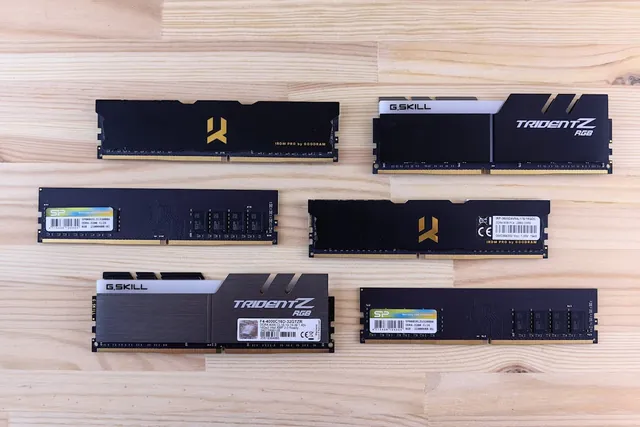
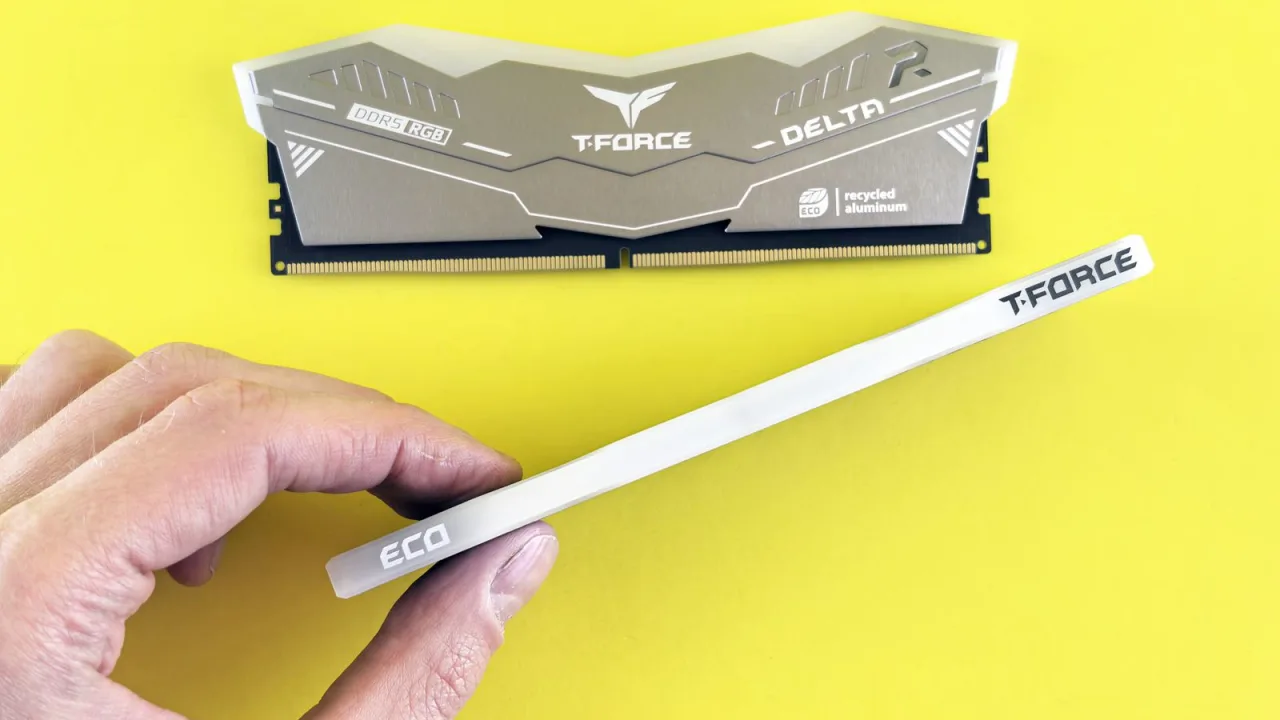
Convert CAS latency (CL) plus memory speed (MT/s) into real nanoseconds so you can compare kits like DDR4 3200 CL16 vs DDR5 6000 CL30 on a fair axis. Formula: ns = (CL × 2000) / MT/s. Includes side-by-side compare, common kit presets, and the reverse direction (solve for CL given a target latency).
Kit A
True latency10.00 ns
Kit B
True latency10.00 ns
Compare
Both kits shown side by side. Lower ns = faster real-world access.
Metric
Kit A
Kit B
Memory speed (MT/s)
3200
6000
Cycle time (ns)
0.625
0.333
CAS cycles
16
30
First-word latency (ns)
10.00
10.00
Peak bandwidth (GB/s, DC)
25.6
48.0
Reverse: target latency -> required CL
Required CAS latencyCL 27
Was this tool helpful?Rate RAM Latency Calculator:5.0(1 rating)Thanks for rating!
RAM Latency Calculator is a free, browser-based online utility that lets you convert CAS latency (CL) and memory speed (MT/s) to nanoseconds.
Cost: Free, no signup
Install: None — runs in the browser
Privacy: Runs locally, no uploads
Platforms: Windows, macOS, Linux, Android, iOS
Time: Under a minute
How The RAM Latency Calculator Works
The calculator converts between CAS latency (measured in clock cycles) and true access time (measured in nanoseconds) using the standard formula ns = (CL × 2000) / MT/s. The factor of 2000 comes from DDR memory's double-data-rate transfer — the real clock runs at MT/s divided by two, and each cycle takes 2000 / MT/s nanoseconds. This "first-word latency" (tCL in the datasheets) is the delay between issuing a READ command and the first 64 bits of data arriving at the memory controller. It is the single most-quoted latency number, but it is not the only one — tRCD, tRP, and tRAS also contribute to the round trip for a fully cold access.
Why DDR5 Kits Have Higher CL Numbers
A common beginner surprise when DDR5 launched: CL40 on an early DDR5 kit sounds much slower than CL16 on DDR4, and on cycle count it is. But because DDR5-5200 runs cycles 62% faster than DDR4-3200, the real ns is closer than the cycle count suggests. As DDR5 matured, CL dropped dramatically — DDR5-6000 CL30 hit the same 10 ns that DDR4-3200 CL16 did, while delivering nearly double the bandwidth. DDR5-6400 CL32 and DDR5-7200 CL36 also hit 10 ns. This is why reviewer guidance for Zen 4 and Zen 5 often recommends DDR5-6000 CL30 as the sweet spot — it matches DDR4's classic latency floor with far more bandwidth.
What The Calculator Does Not Capture
First-word latency is only part of the real story. A full random access to cold memory includes tRCD (RAS-to-CAS delay, typically similar to CL), tRP (row precharge), and potentially tRAS (minimum row-active time). Full-row-miss access on DDR5-6000 CL30-36-36 is roughly (30+36+36) × (2000/6000) = 34 ns, over three times the first-word figure. Cache-friendly workloads (which hit the same row repeatedly) feel more like first-word latency; random-access workloads (databases, graph traversal) feel more like the full tRCD + tRP + tCL figure. The calculator is meant to give you the quick apples-to-apples number, not the worst-case.
Deciding Between Two Kits At The Store
The most common real-world use of this converter is a purchase decision: two kits of the same speed, different CAS, different prices. For a worked walkthrough with live 2026 street prices, the honest gaming-FPS bracket, and a situation-by-situation buying table, read our guide to whether DDR5 CL30 is worth paying more than CL36 — every number in it reproduces in this calculator's presets.
Before paying more for tighter RAM timings, plan a balanced PC upgrade with a CPU-GPU pairing estimate, then confirm the choice using benchmarks for your actual games and settings.
When To Choose Latency Over Bandwidth
On AMD Ryzen (especially Zen 3 and Zen 4), Infinity Fabric has a 1:1 ratio sweet spot with memory clock — pushing past it forces a half-speed mode that kills gains. For Ryzen 7000, that sweet spot is roughly DDR5-6000 to DDR5-6200. For Intel, the ring bus is less latency-sensitive and benefits more from raw bandwidth, so DDR5-7200 and DDR5-8000 are viable. For gaming specifically, lower latency is usually worth more than higher bandwidth, which is why CL30-32 DDR5-6000 kits dominate enthusiast recommendations. For productivity (Blender, Premiere, compilation), raw bandwidth wins — DDR5-7200 at CL36 will outperform DDR5-6000 CL30 in multi-threaded throughput tests despite identical first-word latency.
CL is in clock cycles, and DDR5 runs cycles much faster than DDR4. DDR5-6000 cycles at 6000 MT/s = 0.333 ns per cycle, so CL30 x 0.333 = 10 ns - the same access time as DDR4-3200 CL16. The cycle count is misleading in isolation; always convert to ns.
Is lower ns always better?
Usually yes for gaming and latency-sensitive workloads. For bandwidth-heavy workloads (rendering, compilation, video encode), higher MT/s with slightly higher ns can win because peak throughput matters more than single-access time.
What is the sweet spot for Ryzen 7000 / 9000?
DDR5-6000 CL30 with EXPO. It lands at 10 ns, runs Infinity Fabric at a 1:1 ratio (UCLK = MEMCLK), and is well-supported by most motherboards. Pushing beyond 6200 MT/s on AM5 often forces a half-speed IF mode that kills the gains.
What does the reverse-solve mode do?
Given a target access latency (say, 9 ns) and a memory speed (say, 7200 MT/s), it calculates the CL you would need (27). Useful when tuning manual timings: if you can hit CL 27 at 7200, you have beaten the classic 10 ns mark.
01 / 10DDR5 buying mathPay $120 more for 2 nanoseconds?CL30 vs CL36 looks big on the box. The real difference is 2 nanoseconds.02 / 10What CL really isCAS latency counts cycles, not timeCL is how many clock ticks the RAM waits before answering. Ticks get faster with speed.03 / 10The one-line formulans = 2000 x CL / MT/sTrue latency in nanoseconds. DDR5-6000 CL30: 2000 x 30 / 6000 = 10.0 ns.04 / 10CL30 vs CL36 at 600010.0 ns versus 12.0 nsSame speed, different CL: the whole debate is about 2 nanoseconds of wait time.05 / 10The tie surprise7200 CL36 is also 10.0 nsSo is 6400 CL32. A higher CL on a faster kit can match a lower CL exactly.06 / 10What 2 ns buys in gamesRoughly 1-4% average FPSOnly when CPU-bound, and benchmarks disagree. Smoother 1% lows are the steadier win.07 / 10Price check, Aug 11, 2026The CL30 premium: $120G.Skill CL30 $599.99 vs CL36 $479.99. A Patriot CL30 kit: $429.99. Shop across brands.08 / 10The EXPO/XMP gotchaYour CL30 may be running CL40Kits boot at JEDEC defaults until you enable EXPO or XMP in BIOS. Check yours today.09 / 10The X3D exceptionBig cache blunts CLOn 7800X3D-class CPUs, the stacked cache blunts CL gains. Buy CL36 and save.10 / 10The verdictSmall delta: yes. Upgrade: no.Compare your two kits in real nanoseconds - presets loaded, math done for you.
01 / 10Phone vibration testYour phone stopped buzzingBefore you book a repair, find out whether it is the motor or just a setting.02 / 10The symptomMissed calls and silent alertsA dead motor is easy to miss. You only notice the calls you never felt arrive.03 / 10What is insideA tiny weight on a motorMost phones spin an offset weight or drive a linear actuator to make the buzz.04 / 10Check this firstSettings fake a dead motorSilent mode, Do Not Disturb and per-app vibration all switch the buzz off.05 / 10Run the testOne tap, three patternsThe browser asks the phone to vibrate in short, long and pulsed patterns.06 / 10Result: weakYou feel it, but barelyA faint buzz often means a loose motor mount or a case damping the vibration.07 / 10Result: nothingNo buzz on any patternWith settings ruled out, silence points at the motor or its connector.08 / 10Result: on and offIt works, then it does notIntermittent buzzing usually means a failing solder joint or a worn motor.09 / 10One honest limitiPhones cannot run this testSafari on iOS does not support the browser vibration API, so use Android.10 / 10Your turnFind out in thirty secondsRun the three patterns, then decide whether it is a setting or the hardware.