











Fast answer
DPS is a continuous damage rate; TTK is the time between the first landed hit and the killing hit at fixed HP. Because bullets arrive as discrete events, bullets-to-kill is rounded up and the first hit occurs at 0 ms. For a full-auto comparison, TTK is normally (BTK − 1) × 60,000 ÷ RPM. A lower-DPS weapon can therefore kill faster when it crosses a damage breakpoint.
Weapon stat pages often encourage a shortcut: divide the target’s health by damage per second and call the result time to kill. That continuous estimate is useful for long damage windows, but it can rank two guns in the wrong order during a short firefight. Bullets land one at a time, the killing bullet cannot be split into a fraction, and a small damage change can remove an entire shot interval.
This guide keeps the comparison game-neutral. We will use fictional weapons, define the timing convention, reproduce every result in the TTK Calculator, and separate a weapon’s mathematical minimum from what happens when aim, recoil, range, movement, and network conditions enter the fight.
TTK and DPS answer different questions
Damage per second (DPS) is a rate. If a weapon deals 32 damage per shot at 900 rounds per minute, its raw body-shot output is 480 damage per second. That describes how quickly damage could accumulate while the weapon keeps firing and every shot lands.
Time to kill (TTK) is a threshold result for one specified target. It asks how many complete hits are required to reach or exceed that target’s effective health, then counts the time between those hits. Change the target HP, armor model, hit location, distance multiplier, or fire pattern and the TTK can change even when the listed raw DPS does not.
Neither metric is universally superior. TTK is usually clearer for a fixed-health duel; DPS is often clearer for sustained damage against bosses, vehicles, barriers, or several targets. A useful comparison begins by deciding which question you are actually asking.
What each metric can—and cannot—tell you
| Metric | Measures | Best used for | Does not capture by itself |
|---|---|---|---|
| TTK | Elapsed time from the first landed hit to the killing hit | Fixed-HP PvP duels and bullet breakpoints | Reaction, aim time, misses, travel, reloads, or server delay |
| DPS | Damage output per second during a defined firing window | Sustained damage, large health pools, and damage phases | Whole-bullet thresholds, overkill, or whether the target dies one shot earlier |
| BTK | The number of complete bullets required to kill | Finding damage breakpoints | How quickly those bullets can be fired |
| Shot interval | Time between consecutive shots | Converting BTK into automatic-fire TTK | Damage, target HP, or accuracy |
Why HP ÷ DPS can get a gunfight wrong
The expression HP ÷ DPS treats damage like water flowing through a pipe. At 480 DPS, a 100 HP target appears to take about 208.3 ms of continuous exposure. A gun does not normally deal 0.48 damage every millisecond, however. It deals complete packets—32 damage, then another 32, then another—at scheduled shot times.
With 32 damage per bullet, three hits total only 96 damage. The target survives. The fourth hit is required, so bullets-to-kill must be rounded up. The continuous estimate cannot represent that four-damage shortfall or the wait for the next bullet.
Use the following model for simple full-auto comparisons. It matches the current KBT calculator, while remaining explicit about what is and is not included.
Calculator convention
base damage × range multiplier × (1 − armor reduction)Applies the selected distance and flat comparison-model armor reductions.
BTK = ceil(target HP ÷ effective damage)Rounds upward because a fraction of a bullet cannot finish the target.
interval in ms = 60,000 ÷ RPMConverts rounds per minute into time between shots.
TTK = max(0, BTK − 1) × shot intervalCounts the intervals after the first landed hit.
effective damage × RPM ÷ 60Useful sustained rate under the same hit and range assumptions.
Why the first landed bullet is at 0 ms
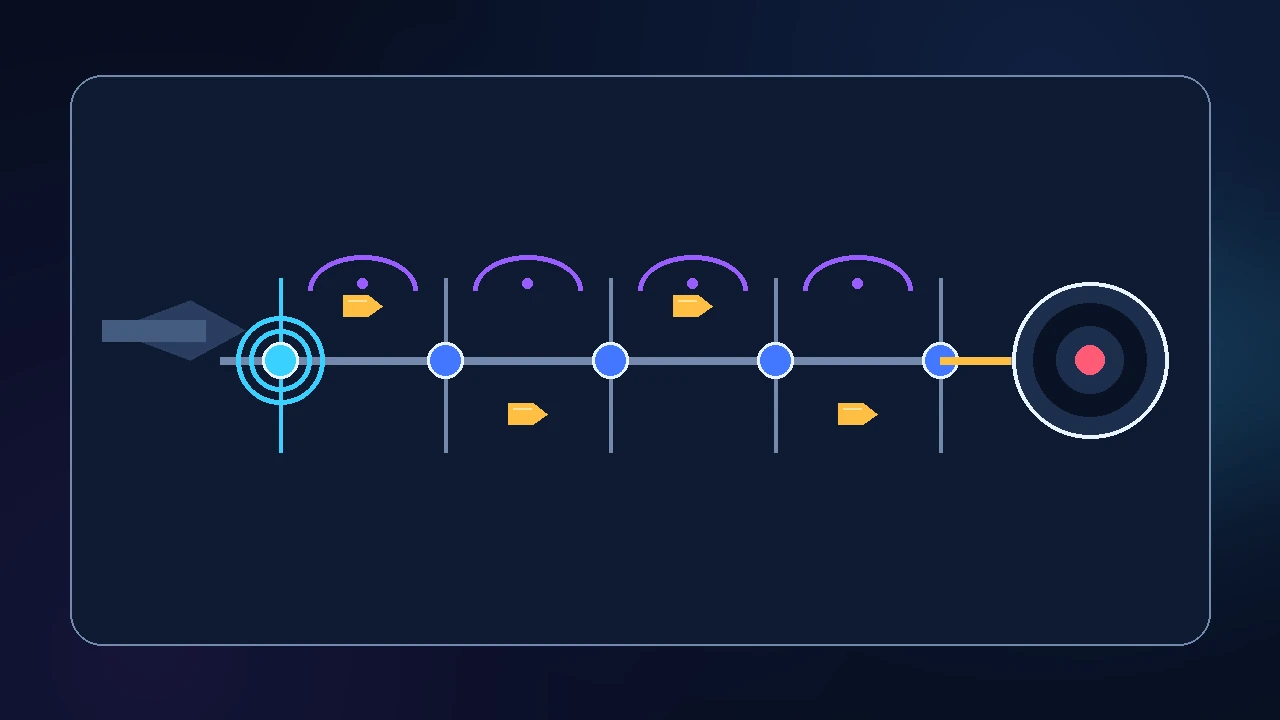
Suppose an automatic weapon fires at 600 RPM. Its shot interval is 100 ms. If the first successful hit defines the start of the TTK window, that hit occurs at 0 ms, the second at 100 ms, the third at 200 ms, and the fourth at 300 ms. A three-bullet kill therefore takes two intervals, not three.
This convention explains the BTK − 1 term. It does not claim that pulling the trigger, firing a projectile, and reaching the target take no time. It simply starts the weapon-only measurement when damage first lands. If a community measures from trigger input instead, the result may include pre-fire delay, projectile travel, charge time, or a server-processing convention and should be labeled accordingly.
Worked example: lower DPS, faster TTK
Now compare two fictional automatic weapons against the same 100 HP target. Use 0% armor, 100% range damage, and a 1× hit multiplier. Keeping the target assumptions identical is essential; otherwise the comparison mixes weapon performance with different rules.
Weapon A has the much higher sustained rate. Weapon B crosses the three-bullet threshold, however, so it needs one fewer hit. That saved interval is enough to reverse the ranking.
| Weapon | Damage | RPM | Raw DPS | BTK at 100 HP | Shot interval | TTK |
|---|---|---|---|---|---|---|
| Weapon A | 32 | 900 | 480.0 | 4 | 66.7 ms | 200.0 ms |
| Weapon B | 34 | 650 | 368.3 | 3 | 92.3 ms | 184.6 ms |
Damage breakpoints and overkill create step changes
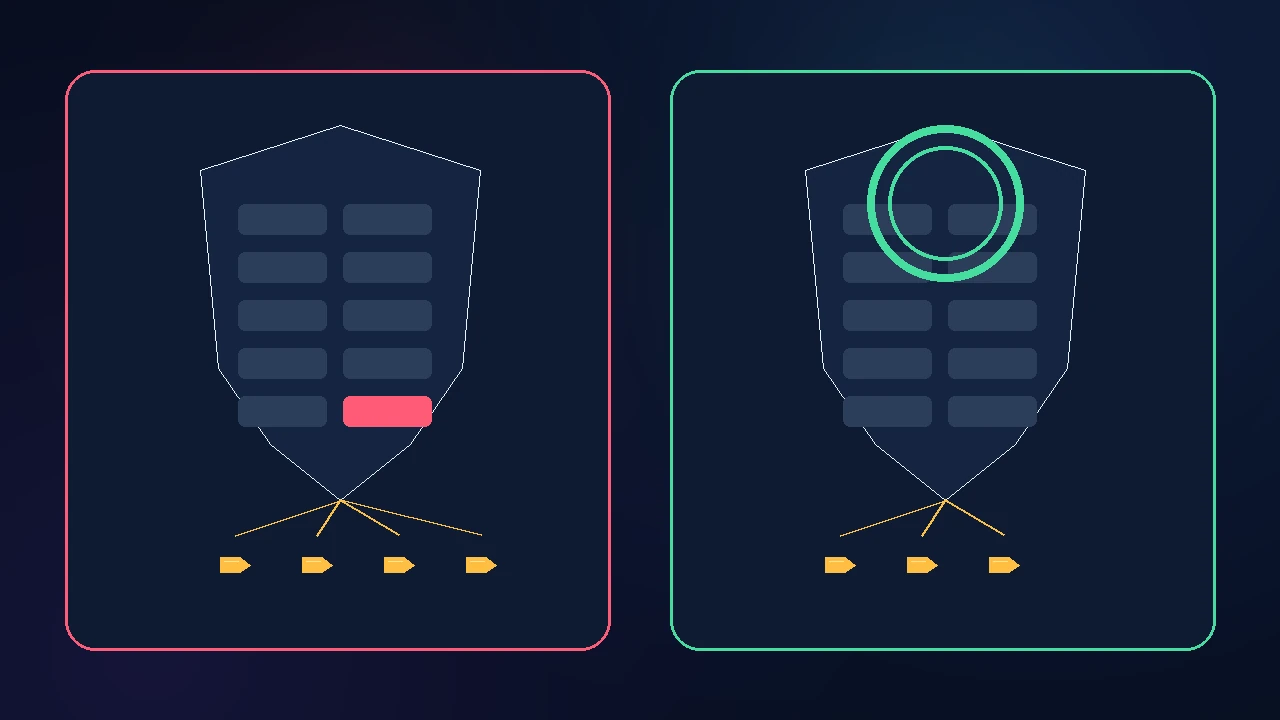
A damage breakpoint is the point where a small damage increase removes one complete bullet from the kill. Against 100 HP at 600 RPM, 33 damage needs four bullets because three hits total 99. Raise the damage to 34 and three hits total 102. The numerical damage increase is small, but TTK drops by a full 100 ms interval.
This staircase behavior is why weapon balance can change sharply at particular health, armor, or range values. A distance falloff that moves a rifle from 34 to 33 effective damage may add a whole shot. A headshot multiplier or armor reduction that crosses the same boundary may remove one.
| Case | Damage | RPM | Raw DPS | BTK | TTK | Damage dealt by killing shot |
|---|---|---|---|---|---|---|
| Before breakpoint | 33 | 600 | 330.0 | 4 | 300.0 ms | 132 total; 32 overkill |
| After breakpoint | 34 | 600 | 340.0 | 3 | 200.0 ms | 102 total; 2 overkill |
Overkill is not wasted in the same way as slow damage
Overkill is the damage beyond the target’s remaining HP on the killing hit. It does not make that target more dead, but it reveals how far a weapon sits from the next breakpoint. In the 33-damage example, four bullets deliver 132 total damage—32 above the target’s HP—because three bullets stop at 99. The 34-damage version crosses the threshold with only two points beyond 100.
Do not compare overkill in isolation. High per-shot damage may also improve headshot, limb, armor, or range breakpoints, while a high fire rate may recover from a missed shot sooner. Breakpoints explain one matchup, not the entire weapon.
When DPS is the better metric
TTK becomes less complete as the damage window grows. If a boss has a large health pool, a barrier regenerates, or a squad must damage several targets across magazines, the long-run output and downtime matter more than one short bullet threshold.
Even then, define the DPS window. “Burst DPS” may ignore a reload; “sustained DPS” usually includes reloads or cooldowns; “effective DPS” may account for accuracy, falloff, weak-point rate, or uptime. Two pages can report different DPS numbers for the same weapon because they use different windows rather than different arithmetic.
Use sustained output when many shots make the effect of one final-bullet breakpoint relatively small.
Compare damage per magazine and total cycle time when a target survives the first magazine.
DPS helps estimate total output, but target switching, overkill, and reload timing still matter.
Use the exact phase length. A short burst window and a long uninterrupted phase can favor different weapons.
Theoretical TTK is not your full gunfight time
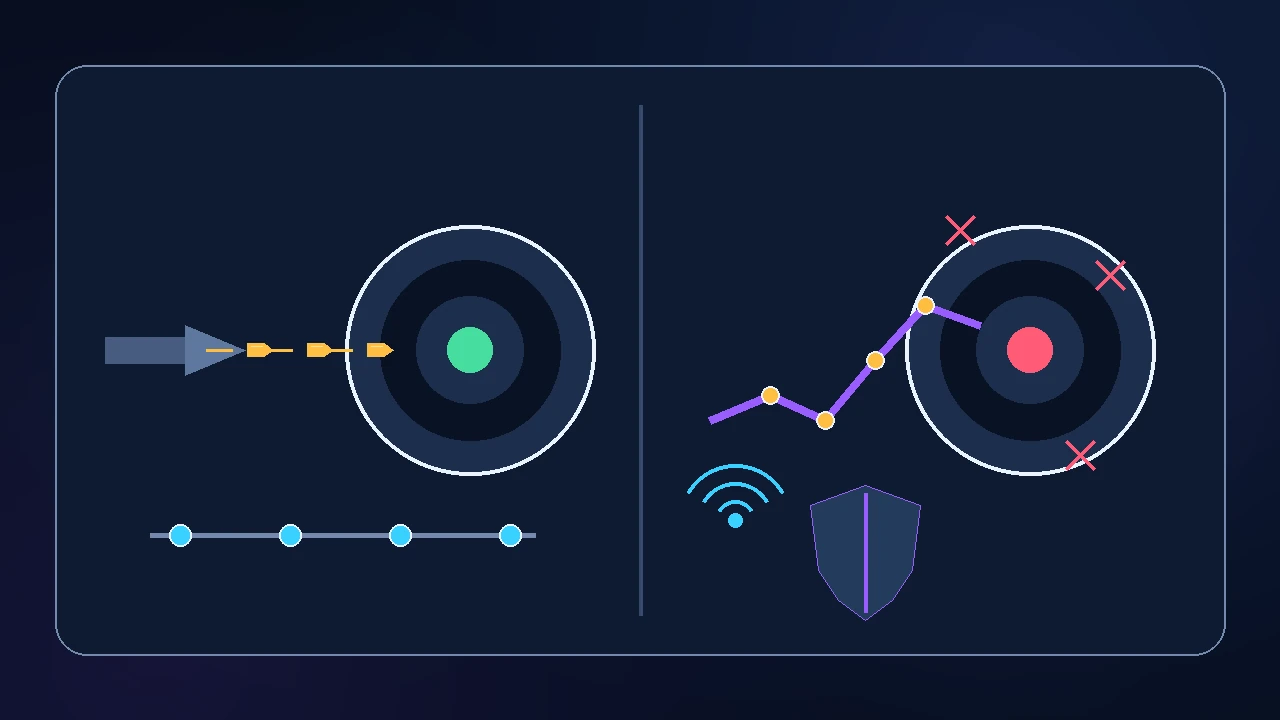
The formulas above describe an optimal weapon-only sequence after the first hit. Real fights include time before that hit and disruptions between hits. A player must see the target, react, move the crosshair, complete any aim-down-sights or sprint-to-fire state, and actually land the required pattern.
EA’s 2026 Battlefield gunplay discussion gives a scoped close-range benchmark of 200–300 ms for automatic primary weapons, while also describing recoil, bullet deviation, muzzle velocity, and body-part multipliers as separate balance levers. That is a useful reminder: a low best-case TTK can be paired with harder control or more demanding hit placement. Read the official Battlefield explanation for that game-specific context.
Projectile behavior matters too. Epic’s Shooter Game documentation distinguishes instant-hit processing from projectile weapons. A hitscan-style stat calculation and a slow projectile should not be treated as the same end-to-end timing model.
| Factor | Effect on the real fight | Inside this simple TTK? |
|---|---|---|
| Accuracy and recoil | Misses or delayed corrections add shot intervals | No |
| Hit location | Head, torso, and limb multipliers can change BTK | Only if entered as effective damage |
| Range and armor | Falloff or mitigation can cross a breakpoint | Yes, only through the selected comparison inputs |
| Projectile travel or charge-up | Adds time before damage lands | No |
| Burst delay or semi-auto cadence | Changes the spacing between some shots | No; use a pattern-specific model |
| Reload time | Matters when the kill exceeds the magazine | No |
| Reaction and aim acquisition | Adds time before the first landed hit | No |
| Input, rendering, and network path | Can alter when actions are processed and displayed | No |
How to compare two weapons without fooling yourself
Use the same target rules for both weapons and change one variable at a time. The goal is not to make a single “best gun” score; it is to see which input creates the result.
- Write down the matchup. Record target HP, armor or shield assumption, hit location, distance multiplier, and whether the weapon is automatic, burst, semi-auto, charged, or projectile-based.
- Enter Weapon A. Open the time-to-kill calculator and record effective damage, BTK, shot interval, body/head TTK, and DPS.
- Enter Weapon B with the same target. Do not change HP or mitigation to match a different mode, patch, or armor tier.
- Compare BTK before DPS. If one weapon needs fewer bullets, identify the exact threshold that created the difference.
- Change one input. Test range damage, armor, or headshot multiplier separately so you can explain why the ranking changed.
- Add practical context last. Consider recoil, accuracy, magazine size, reload, movement, travel time, and platform conditions after the weapon-only result is clear.
Decision checklist
- Use TTK for a fixed-health duel and a defined hit pattern.
- Use DPS for sustained output across a longer damage window.
- Use BTK to find the breakpoint that caused a sudden TTK change.
- Use both TTK and DPS when comparing loadouts or balancing a game.
- Date and source any real weapon values because patches can change damage, RPM, armor, and falloff.
- Call the result theoretical or optimal unless actual accuracy and timing were measured.
Start with the two fictional examples above, then model your own weapon and target in the TTK Calculator. Keep the target constant and see whether DPS or a bullet breakpoint is driving the result.
How one current FPS team thinks about TTK
Battlefield’s official gunplay update shows how a developer discusses TTK alongside recoil, body-part damage, bullet behavior, and practical combat pacing. The figures and balance choices are Battlefield-specific; the useful lesson here is that weapon TTK is one layer of a larger gunplay system.
Sources and calculation basis
The arithmetic examples are reproducible in KBT’s calculator. External sources are used only for their stated game-development context, not to claim that every shooter shares one armor, networking, or damage model.
- Battlefield Combat: Gunplay (EA, 2026)
Official June 25, 2026 discussion of Battlefield 6 TTK, recoil, deviation, muzzle velocity, hit-location multipliers, and the scoped 200–300 ms close-range automatic-primary benchmark.
- Shooter Game documentation (Epic Games)
Official sample-game documentation used only to distinguish instant-hit and projectile implementations; it is not presented as a universal networking model.
- KeyboardTester.click TTK Calculator
The live calculator implements the effective-damage, ceiling-BTK, shot-interval, TTK, and DPS convention shown in this guide.
Continue the comparison with these tools
Use each browser tool for the narrow question it can answer. A setup check complements the weapon math; it does not replace game telemetry.
Calculate effective damage, bullets-to-kill, shot interval, body/head TTK, and DPS from your own inputs.
Reaction Time TestMeasure your visual response separately from the weapon’s first-hit-to-kill window.
Mouse Accuracy TestCheck pointer control when the optimal calculation assumes every required shot lands.
Latency CheckerInspect browser input timing without treating it as a game server or network TTK measurement.
FPS TestCheck visible frame-rate behavior as a display clue, separate from weapon damage math.
Related gaming guides
Learn why aim consistency and stick behavior can separate a theoretical TTK from repeatable hits.
Why the same FOV feels differentSee how camera conventions change perception even when a displayed number looks identical.
What is a good reaction time for gaming?Keep human response time separate from the weapon-only kill interval.
Rapid-trigger settings for competitive gamesUnderstand input actuation without confusing saved input milliseconds with weapon TTK.
Frequently asked questions
- Why is TTK not simply HP divided by DPS?
HP divided by DPS treats damage as continuous. Bullets deal discrete packets, so bullets-to-kill must be rounded up and the target may wait for another shot interval even when only a few HP remain. HP ÷ DPS can be a sustained-damage estimate, but it can rank short gunfights incorrectly.
- Why does the TTK formula subtract one shot interval?
Under the first-landed-hit convention, bullet one starts the clock at 0 ms. A three-bullet kill contains the interval from bullet one to two and the interval from bullet two to three, so it contains two intervals: BTK minus one.
- Is a one-shot kill really 0 ms TTK?
It is 0 ms only when TTK is defined from the first landed hit to the killing hit, because those are the same event. It is not 0 ms from player input to impact; trigger delay, animation, projectile travel, rendering, and network processing may still exist.
- Can a weapon with higher DPS have slower TTK?
Yes. Against 100 HP, the fictional 32-damage weapon at 900 RPM has 480 DPS but needs four bullets and 200 ms. The 34-damage weapon at 650 RPM has only 368.3 DPS but needs three bullets and kills in about 184.6 ms.
- Do armor, falloff, reload time, accuracy, and latency count in TTK?
Armor, falloff, and hit multipliers count when they are included in effective damage. The simple full-auto formula excludes reloads, misses, recoil correction, reaction, projectile travel, charge or burst delays, rendering, and network/server time. Add those separately or label the result theoretical TTK.
Compare the threshold, not just the headline rate: open the TTK Calculator, keep HP and mitigation fixed, and test whether a weapon wins through sustained DPS, one fewer bullet, or a shorter shot interval.






Reader discussion
Comments
Share what worked, what did not, or what you would test next. Every comment is reviewed before it appears.
Loading approved comments…
Leave a comment
No account or sign-in is required. Links and HTML are not accepted.