













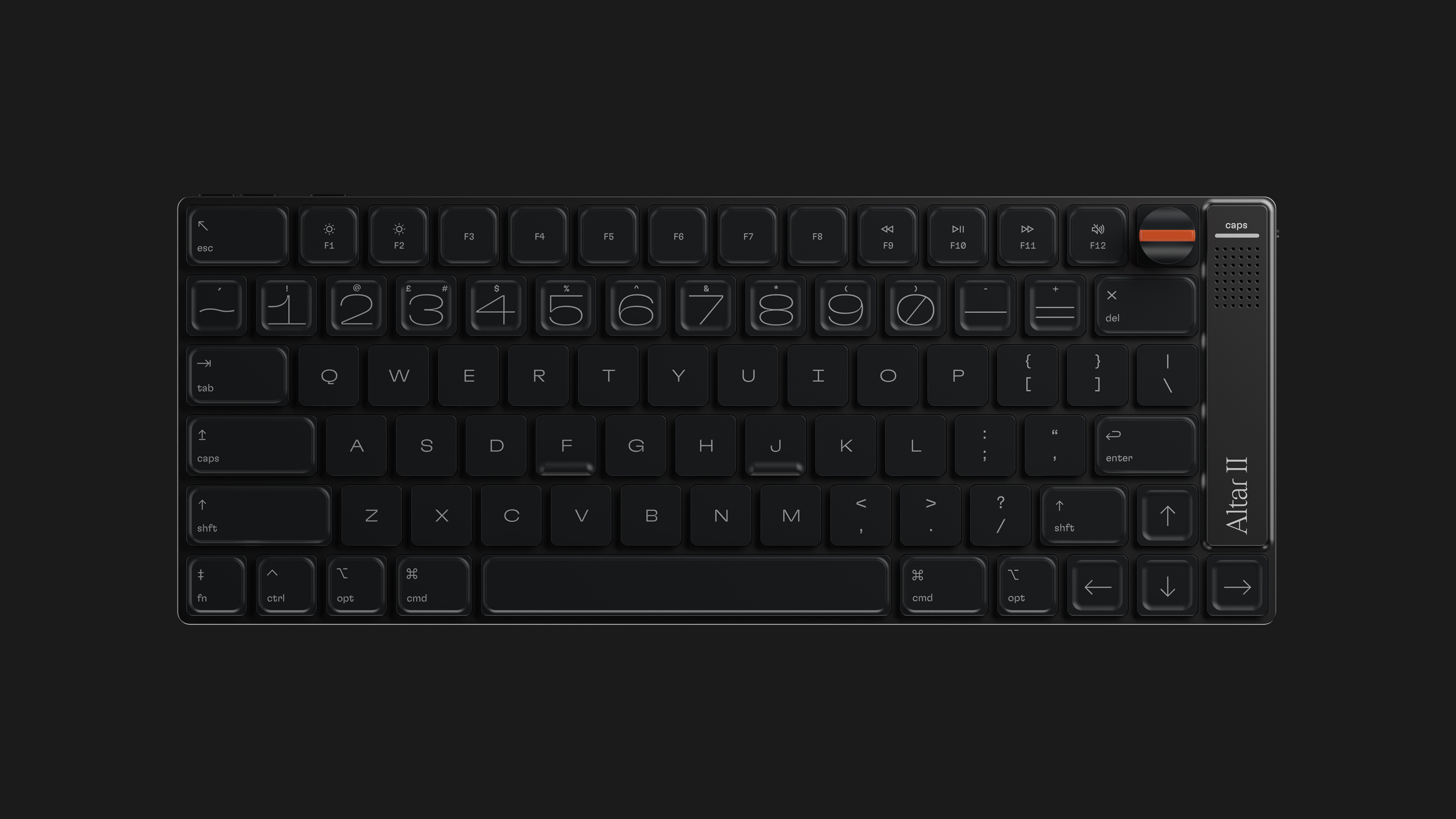


Short answer: Altar II is a real announced keyboard from an active UK company with a previously shipped keyboard, but it is not yet a shipping retail product or an independently tested production model. Electronic Materials Office plans to launch it on Kickstarter on November 10, 2026. A refundable $1 reservation unlocks a $249 pledge tier, but the dollar is not a purchase, deposit, or credit toward the keyboard. Specifications and the early-summer-2027 delivery estimate may change.
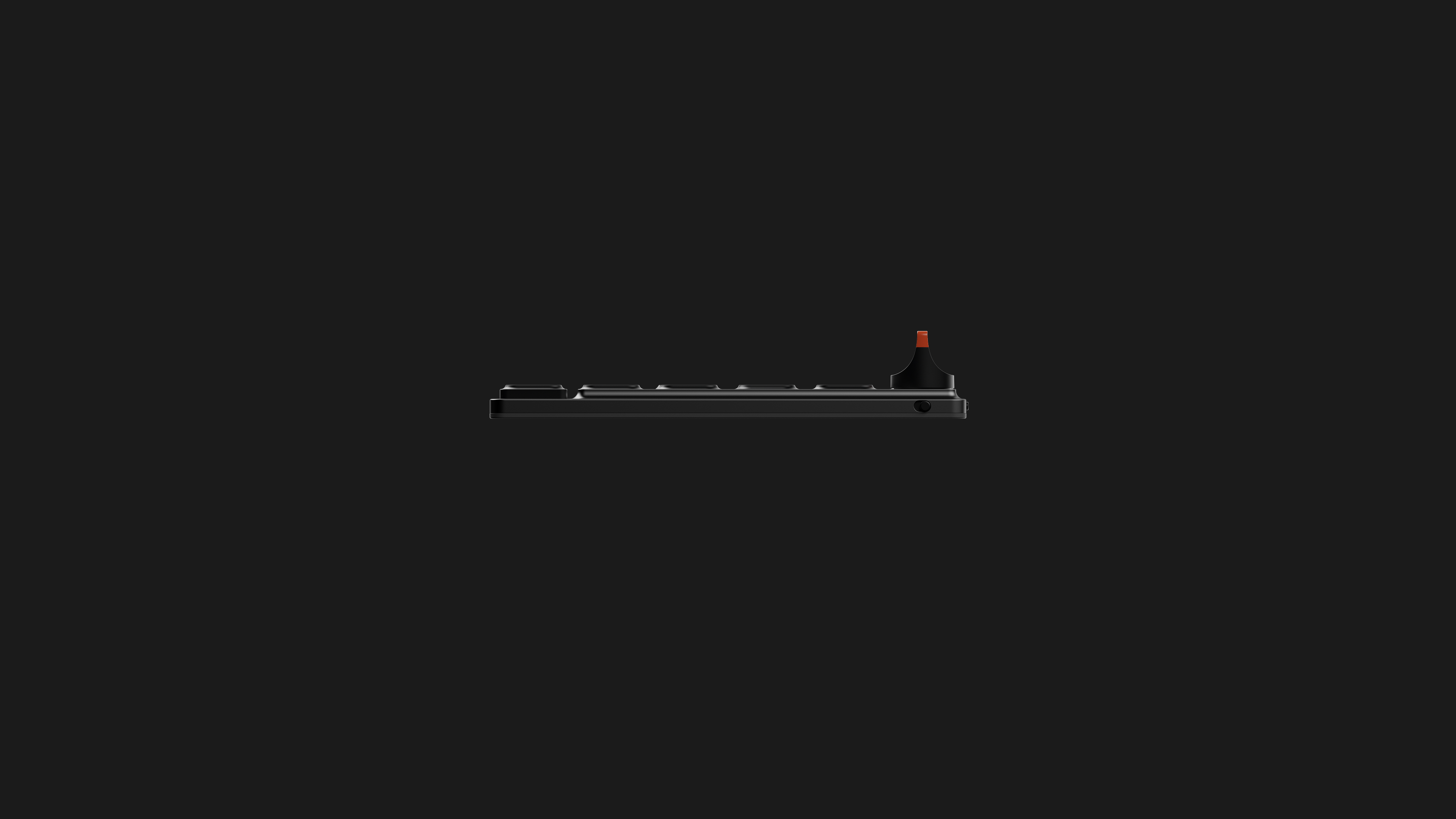
The attention-grabbing number is 4.75mm. EMO describes Altar II as the world's thinnest production mechanical keyboard and HICONSUMPTION repeated that claim in its August 7 launch coverage. The hardware shown publicly is still pre-production, however, so both “world's thinnest” and “production” need attribution rather than being presented as independently established facts.
This article separates what EMO has documented from what remains unknown. If the keyboard eventually ships, the practical next step will be to check the received keyboard systematically rather than assuming every marketing specification is proven by the product page.
Is the Altar II Real, and What Can You Buy Today?
Status on August 9, 2026: announced, in active development, and open for a $1 reservation. It is not in normal retail stock, the Kickstarter campaign is not yet live, and no production delivery has occurred.
Electronic Materials Office Limited is not an anonymous one-page campaign. The UK Companies House register lists it as an active private company incorporated in London on October 4, 2022, with business classifications covering computer peripherals and consumer electronics.
The company's first keyboard also provides some execution evidence. Altar I appears in the official 2024 Red Dot Design Award database, and Forbes reported in July 2024 that Altar I preorders were shipping. The Forbes writer also described testing that earlier model and identified a rattling space-bar stabilizer as a weakness. That history makes Altar II more credible than a render-only project from an unknown company, but it is not proof that the second model will meet its schedule or final specifications.
EMO's current product page includes a typing recording described as captured from pre-production hardware using a Zoom H5 at 24-bit/48kHz, 40cm above the keyboard, with an 80Hz high-pass filter. That is useful development evidence, but it is still the manufacturer's own sample—not an independent production-unit recording.
Altar II Confirmed Specifications and Features
The following specifications are confirmed only in the sense that EMO currently publishes them. They have not been independently measured on a production keyboard.
| Category | EMO's published Altar II specification | Important qualification |
|---|---|---|
| Layout | 75% layout with complete function row and full-size arrow keys; Mac-first legends | Exact key count and ANSI/ISO regional versions are not announced. |
| Dimensions | 299mm wide × 116.5mm deep × 4.75mm high | Manufacturer dimensions; weight is not disclosed. |
| Switch system | Dual-steel-arm scissor switch with retention spring | EMO calls it fully mechanical; it is not described as a conventional MX or Choc switch. |
| Force and travel | 40gf actuation force and 1.8mm tactile travel | Travel appears in product copy; no independent force curve or tolerance is published. |
| Chassis | CNC-machined single-block 6061 aluminium | Final mass and production finish are unknown. |
| Other materials | REGEN polymer keycaps, TPU footpad, silicone membrane, FR4 logic board | EMO says the keycap plastic contains at least 50% recycled material. |
| Firmware | ZMK on the Zephyr real-time operating system | Final source release, update process, and repair policy are not published. |
| Connections | Two Bluetooth 5.0 LE channels plus USB-C | Polling rate, scan rate, wireless latency, and rollover are not specified. |
| Operating systems | macOS 12+ and Windows 10+; announcement also says standard operation on Linux | The Sanctuary companion app requires macOS 26 Tahoe or later. |
| Battery | Up to 30 days with typical use | EMO defines typical use as an eight-hour workday with 30 minutes of backlight daily; capacity is undisclosed. |
| Fast charging | Up to two days of use from two minutes on a standard USB-C port | This is a manufacturer estimate, not an independent charging test. |
| Colour | Black | No other finish is currently announced. |
How Thin Is 4.75mm?
EMO provides its own height comparison. These are the manufacturer's published numbers, not measurements made using one consistent KeyboardTester.click method, so treat them as orientation rather than a lab comparison.
| Keyboard | Height shown by EMO | Source status |
|---|---|---|
| EMO Altar II | 4.75mm | Active-development manufacturer specification |
| Apple Magic Keyboard | 10.09mm | Value used in EMO's comparison |
| Logitech MX Keys | 20.50mm | Value used in EMO's comparison |
| NuPhy Air75 | 21mm | Value used in EMO's comparison |
| Keychron K2 | 30mm | Value used in EMO's comparison |
| IBM Model M | 50mm | Value used in EMO's comparison |
M-Dial, Haptics, Speaker and NiteLite
Official detail source: EMO's M-Dial and speaker press render shows the detachable dial beside the speaker area. Public 3D-printable dial files are planned, not currently available.
Box Contents, Accessories and Engineering Credits
EMO's “typical contents” list includes the keyboard, a coiled USB-C-to-USB-C cable, standard and low-profile M-Dials, a field manual with a decorative reverse, and five stickers. Planned accessories include a recycled-material desk mat, a five-piece supplementary M-Dial pack, a field cap, and a slim softshell case with a dial pouch. Accessory prices and availability are not published.
The product page credits embedded engineers Kurtis Lew and Mike Snyder, electrical engineer Moritz Plattner, mechanical/DFM/manufacturing engineer Steven Nersesian of Metric Designworks, and designer Andrew Emerson. Publicly naming a technical team is a positive transparency signal, but it does not replace production validation.
What Genuinely Changed From Altar I?
Altar II is not a thin revision of the first keyboard. It changes the switch architecture, thickness, controls, lighting, software, acoustics, and feedback system. The comparison below uses Altar II's current announcement and the independently documented Altar I production specifications.
| Decision point | Altar I | Altar II announced specification |
|---|---|---|
| Status | Shipped earlier product; initial run described by EMO as sold out | Active development; Kickstarter planned for Nov. 10, 2026 |
| Height | 15mm | 4.75mm claimed |
| Dimensions | 305.5 × 121mm footprint | 299 × 116.5mm footprint |
| Weight | 635g | Not disclosed |
| Switch | Kailh Choc low-profile, hot-swappable | Custom dual-steel-arm scissor mechanism; hot-swap not announced |
| Force/travel | 50±10gf; 1.5±0.5mm | 40gf; 1.8mm tactile travel |
| Dial | Integrated rotary volume control | Magnetically detachable, haptic M-Dial with configurable actions |
| Feedback | No backlight; no announced haptic engine or speaker | Red/amber backlight, haptic system, and speaker |
| Battery claim | About 21 days / 500 hours | Up to 30 days under EMO's stated typical-use condition |
| Software | ZMK firmware | ZMK plus the planned macOS Sanctuary companion app |
| Layouts | US ANSI and UK ISO were documented | Regional Altar II layout options are not confirmed |
Official mechanism source: EMO's switch-array press render visually supports the custom steel-arm description, but it is not an independent teardown or proof of durability.
Our broader keyboard-switch guide explains why “mechanical” is often used as a family label rather than one single construction. For Altar II, “proprietary scissor-mechanical mechanism” is more precise than implying the familiar MX/Choc stem, socket, spring, and hot-swap ecosystem.
Price, Reservation Terms and Tier-1 Availability
| Stage | Announced price/date | What it actually means |
|---|---|---|
| Reservation | $1 now | Refundable before Kickstarter; not a purchase, not a deposit, and not credited to the keyboard. |
| Reservation-holder pledge | US$249 | One reservation per person unlocks the special campaign link. |
| Early bird | US$279 for the first 48 hours | Planned Kickstarter tier for buyers without the reservation tier. |
| Campaign price | US$299 | Planned price after the early-bird window. |
| Future retail | US$349 | Intended eventual retail price; no retail date or stock exists. |
| Kickstarter | November 10, 2026 | The campaign is not live as of this article's evidence date. |
| Reward delivery | Early summer 2027 | An estimate that EMO says may change. |
EMO's general shipping page lists the United Kingdom, contiguous United States, Canada, and Australia among its destinations. That does not confirm Altar II's final Kickstarter shipping matrix, regional shipping fee, tax handling, keyboard layout, or local-currency price.
| Market | What is confirmed | What is not confirmed |
|---|---|---|
| United States | General shipping page lists contiguous US; campaign prices are announced in USD. | Altar II shipping fee, sales tax, layout/SKU, and retail stock. |
| United Kingdom | Company is UK-based and the general shipping page lists the UK. | GBP price, VAT treatment for the campaign, regional layout, and retail stock. |
| Canada | General shipping page lists Canada. | CAD price, shipping fee, duty/tax total, regional layout, and stock. EMO warns Canadian buyers may owe duties/customs. |
| Australia | General shipping page lists Australia. | AUD price, shipping fee, duty/tax total, regional layout, and stock. EMO warns Australian buyers may owe duties/customs. |
The $1 can be refunded by emailing EMO before the campaign launches; the terms say refunds normally return to the original payment method within five to ten business days. A reservation holder is under no obligation to back the campaign.
Which Manufacturer Claims Matter—and Which Remain Unconfirmed?
Most important wording rule: “world's thinnest production mechanical keyboard” is EMO's claim, based on its comparison with production mechanical keyboards as of August 2026. KeyboardTester.click has not independently measured the Altar II or repeated that market survey, and the keyboard itself is not yet a shipping production item.
Official electronics source: EMO's logic-board press render supports the published ZMK/Zephyr and custom-mechanism story, but cannot establish scan rate, latency, repairability, or production quality.
Specifications Still Missing
- Weight, battery capacity, exact key count, and final model/SKU numbers.
- US ANSI, UK ISO, or other regional layout availability.
- Polling rate, matrix scan rate, end-to-end and wireless latency.
- NKRO/rollover specification and which combinations are guaranteed.
- Switch life-cycle rating, tolerances, repairability, and hot-swap support.
- Manufacturing country, final supplier list, regulatory certifications, and service documentation.
- Final Kickstarter shipping countries, fees, taxes, duties, and reward warranty terms.
- Whether Sanctuary or equivalent advanced configuration will be offered on Windows or Linux.
- Independent production-unit measurements of thickness, battery, charging, sound, wireless stability, and durability.
Who Should Reserve—and Who Should Wait?
Consider the refundable $1 reservation if…
- You want a Mac-first 75% keyboard with an unusually low front edge.
- The aluminium industrial design and removable dial are central to the appeal.
- You value two Bluetooth device channels plus a wired USB-C option.
- You understand that $1 only unlocks a future $249 Kickstarter tier.
- You are comfortable waiting for the campaign details before deciding whether to pledge.
Wait for more evidence if…
- You need a keyboard now, guaranteed delivery, or normal retail returns.
- Your decision depends on ISO/ANSI layout, weight, polling, NKRO, repairability, or Windows software.
- You require proven battery life, wireless latency, acoustics, or production durability.
- You want conventional replaceable switches, a numpad, multiple colours, or a familiar keycap ecosystem.
- You do not want crowdfunding, import-duty, or changing-specification risk.
The closest practical mainstream comparison is Apple's Magic Keyboard: a mature Mac-focused accessory with established retail support versus EMO's more experimental tactile design, dial, haptics, and crowdfunding risk. Altar I owners face a clearer feature jump, but should not assume their hot-swappable switches, known weight, or US/UK layout choices carry over to Altar II.
If wireless behavior is central to the decision, our Bluetooth keyboard delay guide explains how to compare wired and wireless behavior without pretending a browser can produce a laboratory RF-latency result.
Five Honest Browser Tests to Run If Altar II Ships
Test during the campaign's or seller's applicable support window. Start with the factory state, then repeat the same checks over USB-C, Bluetooth channel one, Bluetooth channel two, and after each Sanctuary remap. Change one variable at a time and save screenshots of repeatable failures.
Watch for: missing keys, unexpected codes, or behavior that changes after a remap. Fn-layer, firmware-only, and operating-system-reserved functions may not appear in a browser.
Watch for: a dropped or added browser-visible input. Passing selected chords does not certify the entire matrix or an unstated NKRO claim.
Watch for: two browser events from one intentional press. The symptom alone does not identify whether the cause is the switch, firmware, remap, Bluetooth path, or operating system.
Watch for: repeatable rattles, rubbing, or large zone differences. A browser microphone cannot reproduce EMO's studio setup or establish subjective factory sound quality.
Watch for: consistency changes, not a certified hardware polling number. Browser and operating-system scheduling prevent a raw USB/Bluetooth polling or latency measurement.
Two useful secondary checks are a stuck-key release check after firmware/remapping changes and a real typing session to see whether the compact Mac layout and unusual key shapes work for you. Our keyboard sound and chatter workflow provides a repeatable setup for documenting suspicious sounds and duplicate inputs.
Hard browser limit: KeyboardTester.click did not receive or test an Altar II. Browser checks can show whether ordinary browser-visible keys register, whether selected chords drop or add events, whether a deliberate press produces duplicate events, how a microphone records key sound in your room, and how repeated key events appear to the browser. They cannot verify the 4.75mm chassis, 40gf force, 1.8mm travel, “fully mechanical” construction, raw USB or Bluetooth polling or scan rate, end-to-end or wireless latency, battery life, the two-minute charging claim, haptic or speaker accuracy, durability, production quality, or the claim that this is the world's thinnest production mechanical keyboard.
Kickstarter and Sales-Term Risks
- The reservation is not the keyboard: it only unlocks a special Kickstarter pledge link.
- Delivery is an estimate: EMO explicitly says specifications, materials, and timelines may change.
- No campaign evidence yet: there is no live funding target, backer count, manufacturing plan, stretch-goal list, or campaign FAQ to examine.
- General terms may not equal Kickstarter terms: EMO's site currently lists a one-year limited warranty, no delivery guarantee for preorders, and an unopened-only return policy with a 15% restocking fee and buyer-paid return shipping. The final campaign terms may differ.
- Press renders are illustrative: EMO's sales terms say product images may differ slightly from delivered products.
Source-Based Verdict
Altar II is credible as an announced development project, not yet as a proven retail recommendation. The company exists, shipped Altar I, names its engineering team, publishes unusually detailed internal imagery, and provides a pre-production typing sample. The 4.75mm design, tactile custom switch, removable dial, haptics, speaker, Mac software, and fast-charge concept are genuinely distinctive.
The missing evidence is equally important: no production unit, no independent Altar II hands-on test, no live Kickstarter details, no regional prices or layouts, no weight, no polling/rollover data, no repairability commitment, and no completed shipment. The “world's thinnest production mechanical keyboard” line remains a manufacturer claim attached to a product still in active development.
Practical decision: the refundable $1 reservation can make sense for someone who wants to preserve the lowest announced pledge tier while waiting for the November campaign. A full pledge should wait until the Kickstarter disclosures, final layout options, shipping cost, taxes, warranty path, production schedule, and—ideally—independent production-unit testing are available.
Sources and Evidence
Evidence disclosure: this is a source-based prelaunch analysis, not a hands-on KeyboardTester.click review. We did not receive, type on, measure, hear, charge, or benchmark an Altar II. Specifications, prices, schedules, images, audio samples, and performance statements are attributed to Electronic Materials Office or another named source and were checked on August 9, 2026. The manufacturer says its available typing sample was recorded on pre-production hardware.
Sources were checked on August 9, 2026. Official EMO pages are used for product identity, specifications, prices, terms, and images. Independent sources establish company/predecessor credibility or provide secondary launch context; none is treated as an independent Altar II review.
| Source | Publisher | Shown date | What it supports | Accessed |
|---|---|---|---|---|
| Altar II product page | Electronic Materials Office | Current product page | Dimensions, switches, materials, connectivity, power, features, box contents, engineering credits, and pre-production typing sample | Aug. 9, 2026 |
| Introducing Altar II | Electronic Materials Office | Aug. 6, 2026, 13:00 UTC | Announcement, Kickstarter date, price tiers, delivery estimate, active-development disclaimer, OS support | Aug. 9, 2026 |
| Reservation terms | Electronic Materials Office | Current terms | $1 reservation mechanics, refund, no purchase obligation, and specification uncertainty | Aug. 9, 2026 |
| Shipping destinations | Electronic Materials Office | Current policy | General US/UK/Canada/Australia destinations and duty warning; not campaign-specific shipping confirmation | Aug. 9, 2026 |
| Sales terms | Electronic Materials Office | Current terms | Preorder uncertainty, return restrictions, illustrative images, and one-year limited warranty | Aug. 9, 2026 |
| Press and media centre | Electronic Materials Office | Aug. 6 announcement listed | Official exact-model press images, videos, fact sheet, and media provenance | Aug. 9, 2026 |
| Electronic Materials Office Limited record | UK Companies House | Current register | Active company, incorporation date, London address, and business classifications | Aug. 9, 2026 |
| Altar I award record | Red Dot | Product Design 2024 | Independent confirmation of the first keyboard and award | Aug. 9, 2026 |
| Altar I hands-on and company profile | Forbes | July 5, 2024 | Independent Altar I shipping/test evidence, predecessor specifications, and an observed space-bar issue | Aug. 9, 2026 |
| Altar II launch coverage | HICONSUMPTION | Aug. 7, 2026 | Secondary launch context; not evidence of independent hands-on testing | Aug. 9, 2026 |
EMO Altar II Keyboard FAQ
Is the Altar II keyboard real and available to buy now?
Altar II is a real announced project from Electronic Materials Office, an active UK company whose earlier Altar I keyboard shipped and received independent coverage. Altar II is still in active development, however. It is not a shipping retail product, and the Kickstarter campaign is scheduled for November 10, 2026.
How much will Altar II cost, and what does the $1 reservation include?
Electronic Materials Office says a refundable $1 reservation unlocks a $249 Kickstarter pledge tier. The $1 is not deducted from the keyboard price and is not a purchase. Announced pricing is $279 for the first 48 hours, $299 later in the campaign, and a planned $349 retail price.
Is Altar II really a mechanical keyboard or a scissor keyboard?
The manufacturer calls Altar II fully mechanical, while its specification describes a custom dual-steel-arm scissor switch with a retention spring, 40gf force and 1.8mm travel. Until independent technical inspection is available, the most precise neutral description is a proprietary scissor-mechanical switch system rather than a conventional MX or Kailh Choc design.
Does Altar II work with Windows and Linux, and what Mac version does Sanctuary require?
EMO lists normal keyboard support for macOS 12 and Windows 10 or later, and its announcement says standard USB-C and Bluetooth operation also works on Linux. The advanced EMO Sanctuary companion app is currently listed for macOS 26 Tahoe or later; no Windows or Linux version has been announced.
Can an online keyboard test verify Altar II travel, polling rate, battery life or thickness?
No. Browser tests can observe ordinary key registration, selected chords, duplicate events, stuck-key symptoms, browser-visible repeat timing and microphone-recorded sound. They cannot measure the physical 1.8mm travel, 40gf force, 4.75mm chassis, raw USB or Bluetooth polling, end-to-end latency, battery life, charging speed, durability or the world-thinnest claim.






Reader discussion
Comments
Share what worked, what did not, or what you would test next. Every comment is reviewed before it appears.
Loading approved comments…
Leave a comment
No account or sign-in is required. Links and HTML are not accepted.