Single-color defects
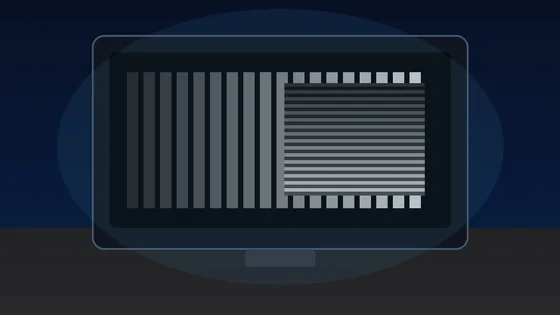
Solid RGB screens expose pixels that remain locked to one color channel.
🖱️Mouse
🖥️Display
Monitor diagnostics
Check for pixels that stay red, green, blue, or white even when the whole screen changes color. This browser test works on monitors, laptops, and phones.
Red, green, and blue screens make single-color defects easier to spot.
Inspect new or recently moved screens for color-specific damage.

Live display check
Run the same screen checker below, but focus on pixels that stay lit in one color while the background changes.

Sub-pixel inspection
Stuck pixels often appear as tiny red, green, blue, or white dots that do not follow the rest of the panel.
Solid RGB screens expose pixels that remain locked to one color channel.
White backgrounds and black backgrounds help confirm hot or bright pixels.
If you try a pixel-fix method, use this page again to see whether the defect changes.
The test runs in a regular browser tab with simple controls.
Simple workflow
Use high-contrast color screens and look for dots that stay bright or remain one color.
Open the live screen test and switch to a clean full-screen view.
Move between red, green, blue, black, and white screens to isolate stubborn color defects.
A stuck pixel usually stays visible on multiple backgrounds instead of disappearing with the rest of the panel.
Search Intent Cluster
The same full-screen tester can be used for black-screen, white-screen, dead-pixel, stuck-pixel, and general monitor inspection.
Run the complete browser-based monitor test with full-screen colors and quick inspection tips.
Open pageOpen a clean black screen to inspect backlight bleed, glow, and bright defects.
Open pageUse a full white screen to spot stuck pixels, dust, tint, and uniformity issues.
Open pageUse black, white, and color screens to spot pixels that stay permanently dark.
Open pageUse a full-screen dark display with adjustable brightness to inspect for backlight bleed, IPS glow, and clouding.
Open pageExplore the full suite for keyboard, mouse, audio, and utilities.
Language support: All major tools are available in 8 languages - Arabic, Russian, Spanish, French, Portuguese, Japanese, German, and Korean. Select your language from the header menu to switch.
Test keyboard functionality, detect ghosting, measure latency, check for stuck keys
Test your keyboard Arabic Keyboard TesterTest Arabic keyboard layout and key response in an Arabic-first interface
Test Arabic layout Typing Speed TestMeasure WPM, accuracy, and typing consistency
Check typing speed Latency CheckerTest device and input latency in your browser
Measure latency Spacebar Speed TestCount how many spacebar presses you can make in 5, 10, or 30 seconds
Test your spacebar Key Repeat Rate TesterMeasure your keyboard key repeat rate (Hz) and initial delay (ms) in your browser
Test repeat rate Typing Rhythm FingerprintVisualize your inter-keystroke timing patterns and get a rhythm consistency score
Analyze rhythm Keyboard Switch Sound AnalyzerClassify your mechanical keyboard switches as linear, tactile, or clicky using mic FFT analysis
Analyze sound Mouse TesterCheck mouse buttons, scroll wheel, cursor movement, and responsiveness
Test your mouse Mouse Speed TesterMeasure your click speed (CPM or CPS) with timed tests
Check click speed Mouse Sensitivity / DPITest DPI, sensitivity, and tracking accuracy
Test DPI settings Mouse TrailVisualize mouse movement trails and precision
View mouse trails Ghost Click DetectorDetect unintended or phantom clicks
Detect ghost clicks Mouse Polling Rate TestCheck if your gaming mouse runs at 125Hz, 500Hz, 1000Hz or higher
Test polling rate Mouse LOD TesterMeasure your gaming mouse lift-off distance to optimize sensor performance
Test LOD Screen TesterDetect dead, stuck, or hot pixels on screens
Test your screen Monitor Refresh Rate TestDetect if your display runs at 60Hz, 144Hz, 240Hz or higher
Test refresh rate Monitor Color TestCheck color accuracy, gradient banding and backlight uniformity
Test colors Backlight Bleed TestCheck your LCD monitor for backlight bleed, IPS glow, and clouding
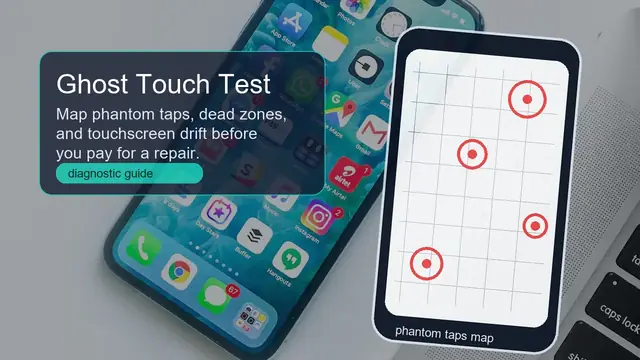
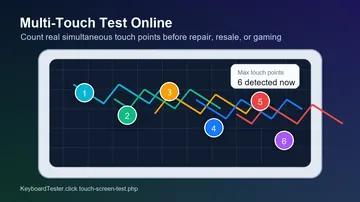
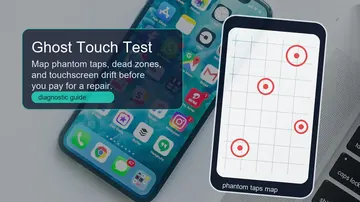
Test for bleed Touch Screen TestTest for dead zones, ghost touches and multi-touch on phone or tablet
Test touch screen PWM Flicker TestCheck if your monitor uses PWM backlight dimming that can cause eye strain
Test for flicker Webcam TesterCheck webcam quality, resolution, and snapshots
Test your webcam Mic TesterVerify microphone input and audio levels
Test your microphone Headphone / Speaker TesterTest stereo channels and sound output
Test audio output OCR ToolExtract text from images quickly
Extract text now QR Code ReaderScan QR codes with camera or image upload
Scan QR codes QR Code GeneratorCreate custom QR codes instantly
Create QR code Password GeneratorCreate strong, secure passwords instantly
Generate password WhatsApp Link GeneratorCreate clickable WhatsApp chat links
Generate chat link WhatsApp Brand LinksCreate branded WhatsApp links and QR codes
Create brand link WhatsApp Sentiment AnalyzerAnalyze chat sentiment and tone
Analyze sentiment All ToolsBrowse all hardware testing tools in one place
View all tools Gamepad TesterTest PS5, Xbox, Switch and PC controller buttons, stick drift and triggers
Test controller Reaction Time TestMeasure how fast you react with a browser-based millisecond reflex test
Test reaction timeNo tools match that category yet.
A stuck pixel test helps you find pixels that remain lit in one color, usually red, green, blue, or white, even when the rest of the display changes. These defects are easier to diagnose on solid RGB screens than on busy desktop backgrounds.
This page uses the same browser-based screen tester as our main display tool, but it targets the specific search problem people have when they notice a bright colored dot on a monitor or laptop panel.
If the pixel never lights at all, return to the dead pixel test to confirm the defect type.
Sometimes. A stuck pixel may improve after gentle pixel exercise methods or extended use, especially if the problem is limited to one sub-pixel channel. This page is useful before and after any attempted fix because you can retest the screen on the same set of solid colors.
If the defect never changes across bright and dark screens, it may be a dead pixel instead of a stuck one.
Stuck pixels often appear red, green, blue, or white because one or more sub-pixels remain active when they should change with the rest of the screen.
Yes. Full-screen mode removes browser bars and distractions so you can inspect the whole panel, including edges and corners.
No. Backlight bleed is a larger glow or uneven brightness pattern, while a stuck pixel is a tiny single-pixel or sub-pixel defect.
Quick steps to run the screen tester and review your pixel issues results.
Make sure the page is focused and the correct device is selected.
Use the reset button to clear results and start over.
Most tools work best on desktop, but mobile may still function for basic checks.
Yes. Reset after each run to compare results.
Testing runs locally in your browser and is not uploaded.
Try another browser or device to confirm the issue.